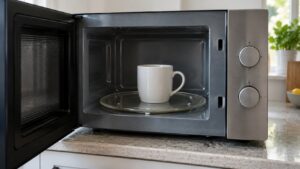
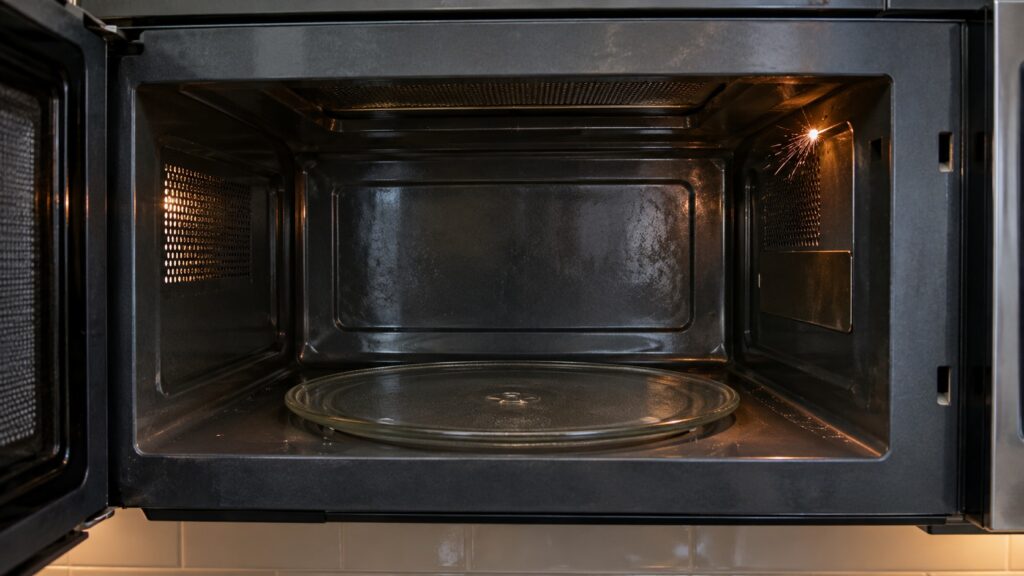
A Maytag microwave sparking is a problem you stop first and diagnose second. Sparks and flashes inside the cavity, which technicians call arcing, happen when microwave energy jumps between two points, usually from metal in the cavity, from food residue that has carbonized or from a damaged waveguide cover or burned cavity paint. Some causes are harmless once you remove the object. Others mean a part is damaged, and continuing to run the microwave can burn a hole in the cavity wall. This guide tells you how to tell which case you have.
What should you do the moment a microwave sparks?
Press Stop or open the door, which cuts the microwave energy at once. Do not wait to see whether it passes. Then remove whatever is inside, let it cool, and inspect it. If the sparks happened while the microwave was empty, do not try it again to check. Running a microwave with nothing inside is hard on it even when it is healthy, and a damaged spot can flare. If you smell burning plastic or see smoke, keep the door closed to starve any flame, unplug the microwave at the wall and call for help if there is any fire.
Is it something you put in the microwave?
This is the most common cause, and it is easy to rule out. Metal reflects microwave energy and concentrates it at edges and points, which makes sparks. Typical offenders are aluminum foil, a metal twist tie on a bag, a fork or a spoon, a dish with a metallic rim or painted gold or silver trim, a travel mug, and a takeout container with a metal handle. Some produce, such as whole grapes cut almost in half, and some mineral-rich food can also spark. Move the food to a plain microwave-safe dish and try again with a cup of water. If it does not spark, the cause was the dish.
On models with convection or Dual Crisp, use only the accessories made for that mode, and do not put them in during a normal microwave-only cycle unless the manual allows it.
Is it the waveguide cover?
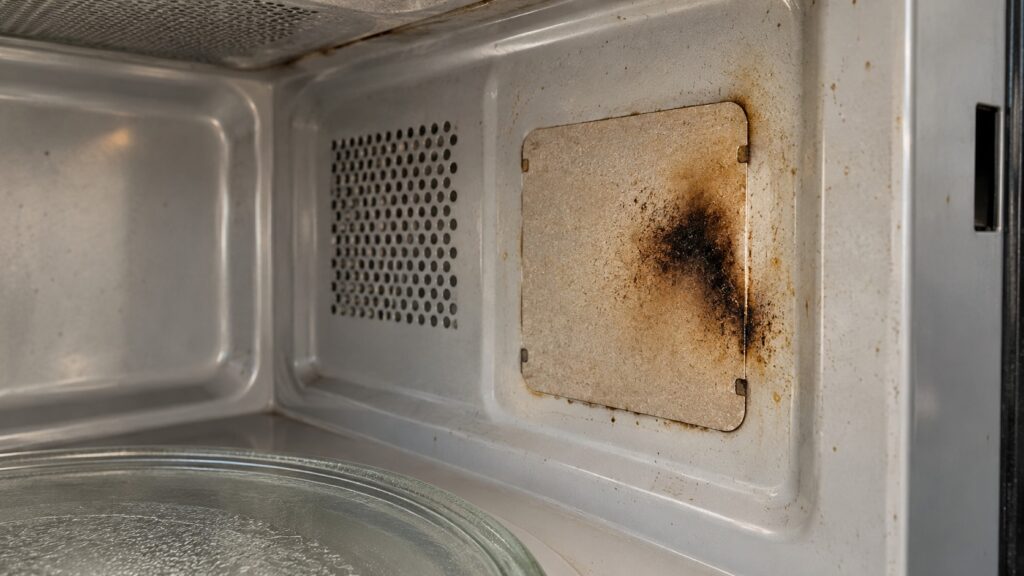
In most over-the-range and countertop microwaves, the energy enters the cavity through a small opening covered by a thin sheet, called the waveguide cover. It is often a brownish or tan square on the right side wall or on the ceiling. Its job is to keep grease and food splatter out of the waveguide. When it collects splatter, absorbs grease or burns, it can carbonize and spark, and the spark gets worse with each cycle. A cover that is dark, brittle, torn or full of holes should be replaced. Technicians list a damaged waveguide cover among the most common causes of arcing.
Many covers can be reached from inside the cavity, but the part must match your model, and the work is close to high-voltage components. If you are not sure, have it replaced. The capacitor behind the panel can hold a dangerous charge even after you unplug the microwave, so never open the outer cabinet.
Is the cavity paint damaged?
The inside of the cavity is painted metal, and the paint protects the steel and keeps the energy from jumping. Look for bubbled or peeling paint, black burn spots, rust or bare metal, especially near the waveguide and around the corners. A small scratch can sometimes be touched up with a food-safe microwave paint that is made for the purpose, but burned or bare areas usually keep arcing. If the damage is large or spreads, the microwave is no longer safe to use, and replacing the unit may be wiser than repairing it. Our Maytag microwave repair or replace guide explains how to weigh it.
How can you keep it from happening again?
Habits matter more than parts here. Most waveguide covers fail because splatter was left to bake on, cycle after cycle, until the grease turned to carbon. A thirty-second wipe with a damp cloth after a messy reheat is much cheaper than a replacement cover. Use only containers marked microwave-safe, and check that the turntable is seated on its hub and rolls freely, since a tilted plate can bring a dish close to the wall.
Wipe the cavity and the waveguide cover after splattery foods. Cover food with a microwave-safe lid or a paper towel, which keeps grease in. Do not run the microwave empty. Do not store anything in it. If it is an over-the-range model, keep the grease filter clean. Our guide to cleaning and maintaining a Maytag microwave shows safe cleaning steps, and the explanation of how an over-the-range microwave works helps you see where the energy goes.
What if it sparks and also stops heating?
An arcing microwave that then stops heating may have damaged the magnetron or the high-voltage diode, which is specialist work. Check the simple settings first, such as Demo Mode and Control Lock, and a door that does not fully close. Our microwave runs but will not heat guide covers those, and the F1E4 and E-series codes guide covers the control codes the display may show.
We are an independent repair company, not the manufacturer. If your microwave sparks with a plain dish, our Maytag microwave repair service can inspect the waveguide cover and the cavity for safety, and you can book a visit online.