For Maytag washer bedding, the short rules are these: wash one bulky item at a time, give it room to move, choose Allergen for pillows and sheets or Heavy Duty for a heavy, soiled load, and stop the cycle to redistribute if it bangs or pauses. Check the care label first, and never wedge a comforter in so tightly that the drum cannot tumble it.
How do you wash a comforter in a Maytag washer?
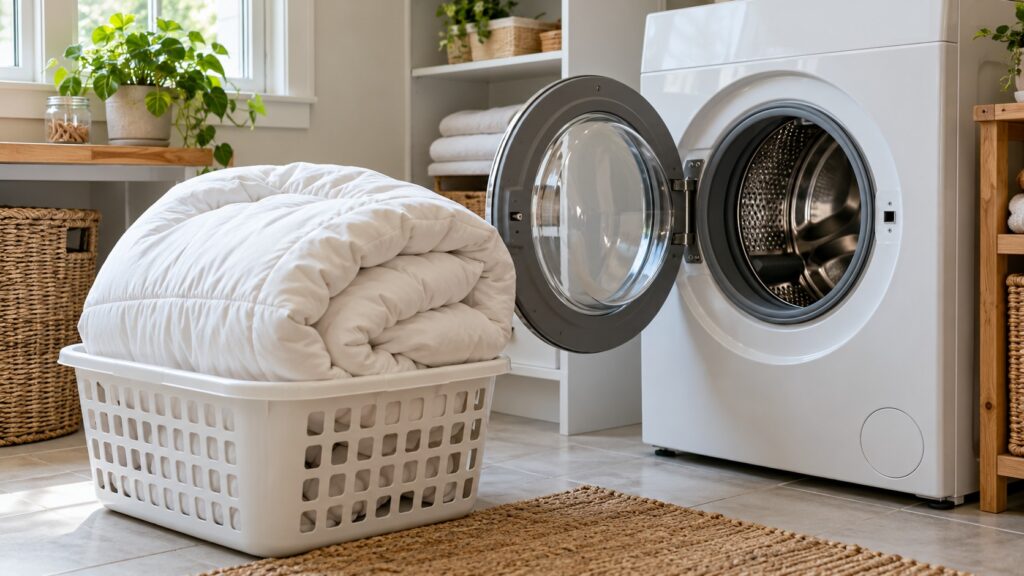
Treat a comforter as the heaviest, least cooperative thing you will ever put in the drum. Check the care label first; if it says dry clean only, leave it out. If it is washable, fold or loosely roll it so it can unroll in the water, and put it in on its own or with two or three towels. Our washer vibration guide explains why: a single heavy item such as a bath mat or comforter can throw the drum off balance, and the cure is to wash heavy items with other items so the weight is spread out.
Do not stuff it in. The drum should have room to move the load, and a packed drum defeats a washer entirely. If you cannot slide your hand between the bedding and the drum wall when it is loaded, take something out. Use the amount of detergent shown in the owner’s manual for a normal load, not extra, because bedding holds on to suds.
Which cycle should you choose for bedding?
Our Maytag washer cycle settings guide explains each setting, and two matter for bedding. Allergen uses hot water with an extended wash and extra rinses. Our guide suggests it for bedding, pillows, stuffed animals and curtains in allergy-sensitive households, and the extra rinses help clear detergent residue. Heavy Duty is the option for heavily soiled loads: it uses hot water, aggressive agitation and an extended cycle, and our guide notes it runs 90 minutes or more. It is intense, so keep delicate fabrics out of it.
Normal handles sheets and pillowcases in most homes. Whether your washer has all of these, and what temperatures it uses, depends on the model, so read the cycle chart in your manual. The names and settings differ from washer to washer; for example, our MHW8630HC page lists PowerWash, Extra Power and Deep Fill or Deep Water Wash, not the cycles above, so read your own cycle chart.

What if you have a lot of clothes and want the quickest cycle?
People ask which cycle to use when the hamper is overflowing. The short answer is that the cycle does not replace room in the drum. A heavy load needs space, time and the right cycle. Quick Wash cuts cycle time by raising temperature and agitation, according to our guide, and it is meant for lightly soiled items you need in a hurry, not for a heavy, dirty load. When the pile is large, split it into two loads, and keep Heavy Duty for the items that are truly soiled. Overloading to save one cycle usually costs two, because the first comes out damp or unevenly cleaned.
If you wash with an agitator, remember that the post takes up room in the middle of the drum. Our agitator versus impeller guide says an impeller machine is clearly better for bulky items because a central post takes room a comforter needs.
Why does the washer shake or stop with a big load?
A wet comforter is heavy, and it clumps. The washer senses the imbalance and pauses or slows the spin to protect itself. Maytag front-load washers spin at up to 1,400 RPM according to our vibration guide, so an uneven wet load matters. If the washer pauses mid-spin and displays an unbalanced load message, stop it, open the door, spread the bedding out evenly, add a towel or two and restart. Also check that the washer is level and that the shipping bolts were removed on a newly installed machine; our vibration guide covers both.
If the washer will not spin at all, or if the cycle is interrupted with a message, see our pages on cycle interrupted codes. A load that is stuck should be pulled out by hand only after the washer has stopped and the door has unlocked. Never force a locked door.
A few small habits make bulky loads easier on the machine. Close zippers and fasten duvet cover ties so they do not snag the drum. Wash a pillow pair, not a single pillow, so the weight is even. Pre-treat stains before the wash instead of choosing a longer cycle to compensate. And run a bedding load when you are home, so you can hear the washer and step in if the drum starts to bang.
What should you do after the wash?
Take the bedding out promptly and dry it fully. Damp bedding left in the drum smells and can lead to a musty washer, so run the drum clean cycle on schedule and leave the door ajar between loads. Our door boot cleaning guide covers the front-load seal, where moisture collects. Bulky items often need more than one drying cycle, so check the dryer partway through and shake the bedding out before you restart it. Pillows and comforters dry from the outside in, and a damp core is easy to miss until it smells.
If a bedding load leaves the washer with a smell, a leak or a loud noise, turn off the water and stop the washer before you look further; if there is water near the outlet, sparks or a burning smell, switch off the washer’s breaker at the panel from a dry spot and do not pull the plug from a wet outlet. Our washer repair page explains the visit, and you can book a visit online.