To clean the Maytag washer inlet screens, shut off both wall water valves, unplug the washer if the outlet is dry and safe to reach, unscrew the hot and cold hoses by hand over a bucket and a towel, take out the small fine-mesh screen at each connection, rinse it under running water, brush off any grit with a soft brush, put it back and reconnect the hoses snugly. Our Maytag washer error codes reference tells owners to inspect these screens for mineral deposits when a washer is slow to fill. Do it if the washer fills slowly, and as a routine check when you inspect the hoses.
What do the inlet screens do?
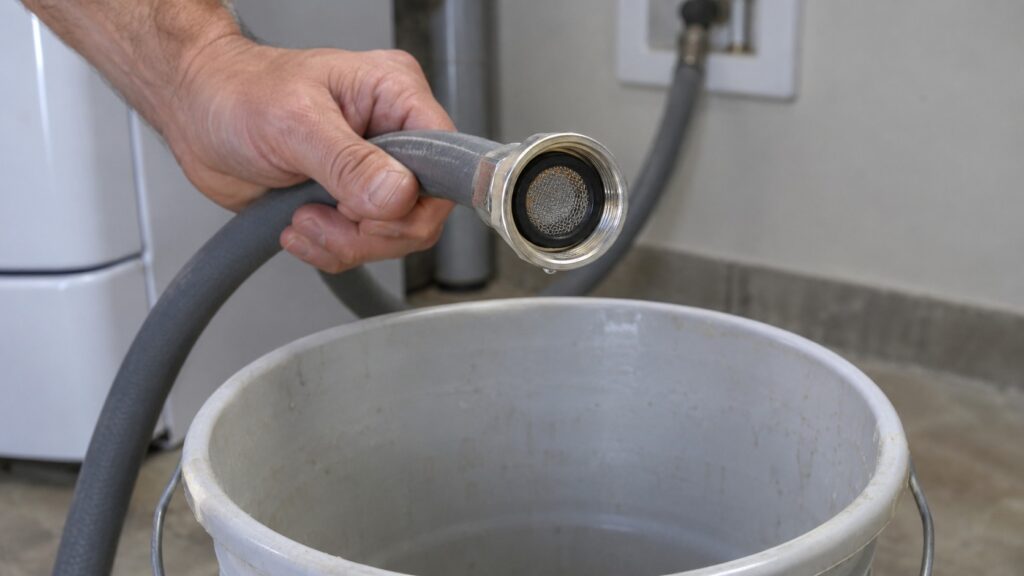
Each hose connects to the washer through a small, fine mesh screen. The screen catches grit, rust flakes and mineral scale from the water supply before they reach the inlet valve, where they could stop it from opening fully or closing tightly. Our guide to how the inlet valve works explains the valve behind the screens. A screen that is clogged restricts the flow, so the washer takes longer to fill. In a hard-water area or after plumbing work, they can clog quickly.
How do you know the screens need cleaning?
The signs are a slow fill, a fill that seems weaker than it used to be, a washer that pauses and then stops because it did not fill within the allotted time, or a drop in flow on one side only, hot or cold. Our Maytag washer error codes reference describes a fill timeout and says to check that both supply valves are fully open and then to inspect the inlet hose screens for mineral deposits. Check the wall valves first, because they are the quickest to rule out.
If the washer still fills slowly with clean screens, the problem is deeper in the fill path, and our Maytag washer leaks guide covers the hoses and the valve, where the issue may lie.
How do you clean them step by step?
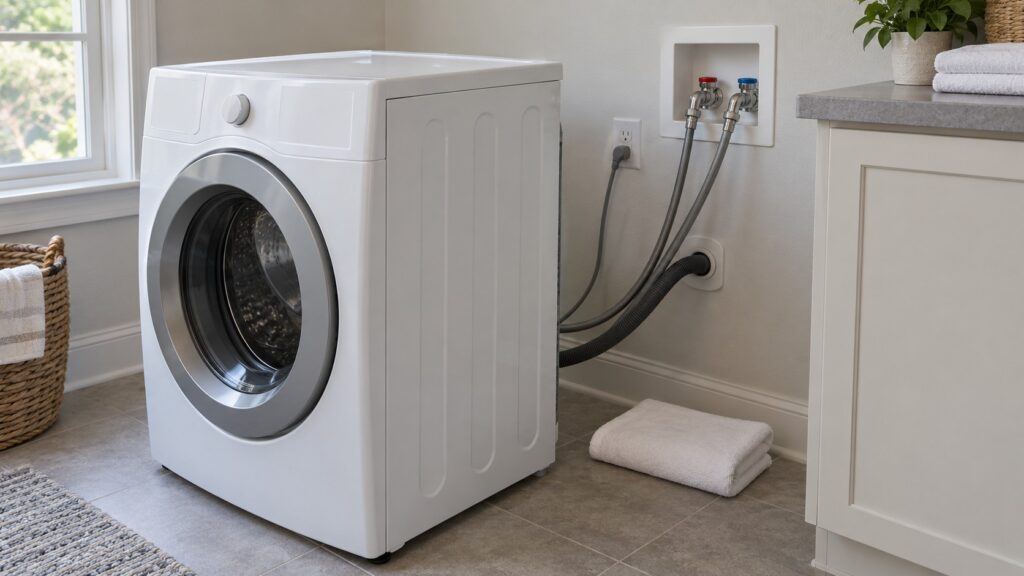
- Close both wall valves, hot and cold.
- Unplug the washer. If the outlet is wet or you cannot reach it safely, switch off the breaker at the panel instead.
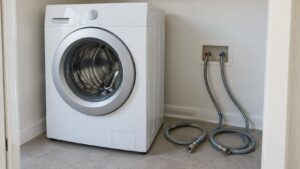
- Pull the washer out far enough to reach the back, and put a towel on the floor and a bucket under the hose ends.
- Unscrew each hose from the washer by hand. Some water will run out, so keep the hose end pointed into the bucket.
- Look into the end of the hose and the washer’s inlet port for the small mesh screen. Lift it out gently, using small pliers only if it will not come out by hand.
- Rinse the screen under running water and brush grit away with a soft brush. If scale is stubborn, a soak in white vinegar can loosen it, but only if your owner’s manual allows it; rinse well afterward.
- Seat the screen again in the same direction, check the rubber washer inside the hose fitting and reconnect each hose.
- Hand-tighten, then give a quarter turn with pliers, as our leaks guide advises. Do not overtighten.
What should you check when you put it back together?
Open both wall valves slowly and look at each connection for drips. Our leaks guide says the rubber washers inside each hose fitting can go stiff, crack or flatten and let water seep past, so replace one that is not soft and flat. Dry the connections with a paper towel and run your finger around them. Then plug the washer in, run a short cycle and watch the back connections while the washer fills. A drip means a loose coupling or a bad washer.
Leave the hoses in a gentle curve, not kinked or squeezed against the wall, when you push the washer back. Check the level of the washer afterward, too.
How often should you clean them, and what about the hoses?
Whenever fill speed drops, and as part of a regular look at the hoses. Our leaks guide recommends inspecting fill hoses every six months and replacing them every five years, and our installation guides suggest braided stainless steel hoses instead of rubber. If a hose is bulging, cracked, kinked or leaking at the coupling, replace it. If you find a lot of rust or grit in the screens each time, it is worth asking a plumber about the source.
Some washers have a screen on the washer side as well as the hose side. Look at your manual or the connection itself to see what yours has.
What if cleaning the screens does not help?
Then the screens were not the problem. Confirm that the wall valves are fully open and that the hoses are not kinked, then think about the inlet valve itself or the control. A valve that is weak, stuck or leaking is a technician’s job, since it sits behind a rear panel and is wired to the control. Do not take the panel off. If you find water near an outlet, switch off the breaker at the panel while standing on a dry floor and never pull a plug from a wet outlet.
When should you call a technician?
Call if the washer is still slow to fill with clean screens, fills with only one temperature, leaks from the back, keeps taking in water or hums without filling. Tell the technician what you cleaned and what you saw. Our Maytag washer repair page explains how a visit works.