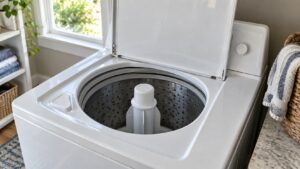
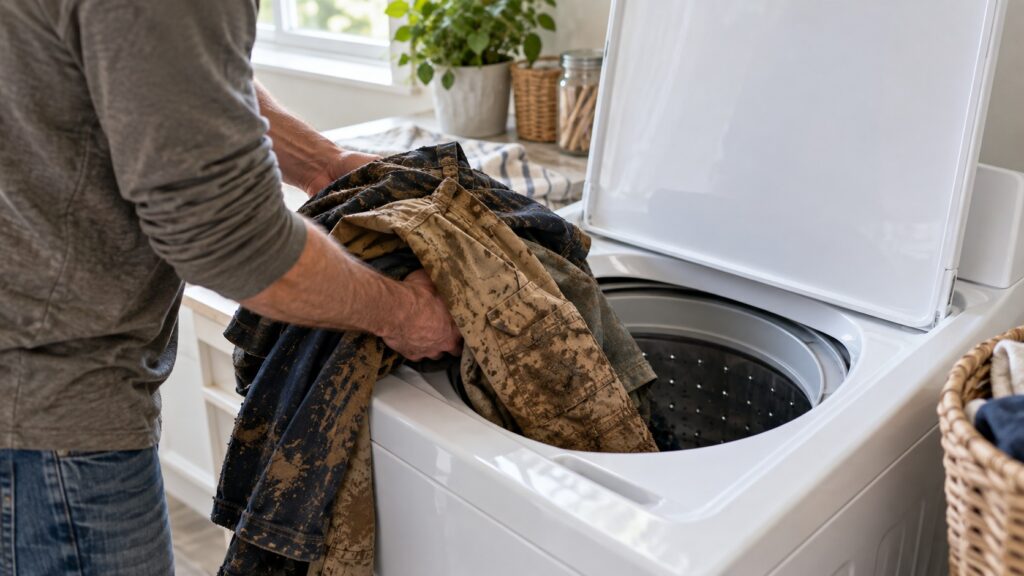
Maytag PowerWash is the heavy-duty wash option on the washer — not simply a longer cycle, but a combination of extra agitation, a longer soak and a hotter wash aimed at soil that an ordinary cycle leaves behind. It is the setting people either use for everything or never find, and both are mistakes for different reasons.
What it actually changes in the cycle
Three things happen that do not happen on a normal wash. The load soaks before the wash proper, which softens dried soil so the mechanical action has something to work with. The agitation phase runs longer and harder. And the water temperature is higher, because most of what makes clothes dirty — oil, grease, body soil — releases far better above a certain temperature.
None of that is magic and all of it is straightforward mechanics. It is also why the setting takes noticeably longer than a normal cycle: it is doing more of everything rather than doing something different.
The mistake of using it on everything
A heavy-duty option used by default wears clothes out. More agitation means more pilling on knits, more stress at seams, and more of the small damage that shows up over a year rather than in one wash. Hotter water sets some stains rather than removing them — protein stains especially, where heat cooks them into the fibers.
The rule that works: match the setting to the soil, not to the load size. A full drum of lightly worn shirts wants a normal cycle; three muddy pairs of trousers want PowerWash. Our agitator against impeller guide covers the mechanical side of how your machine cleans.
What to do before reaching for it
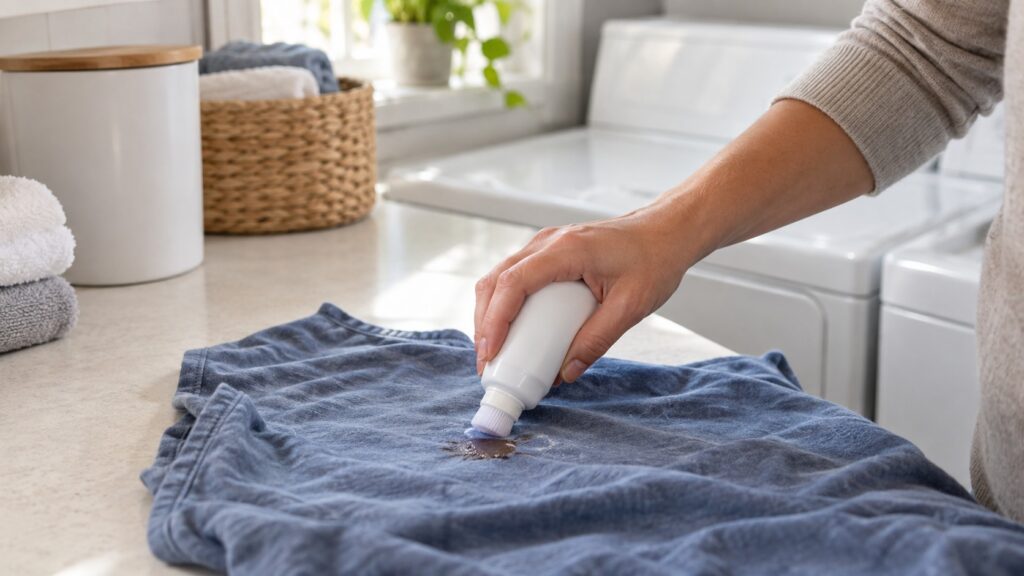
- Pre-treat the spot. A stain remover on the mark does more than a heavier cycle on the whole load.
- Do not overload. Clothes clean by moving, and a packed drum defeats any setting — three quarters full, with room for a flat hand above.
- Check the temperature. Some stains need cold. Blood, egg and dairy set in hot water.
- Use the right detergent dose for your water hardness rather than adding more to compensate.
When it is genuinely the right answer
Work clothes with ground-in dirt, garden and yard clothing, sports kit that has been on grass or mud, kitchen textiles carrying grease, and anything that has sat damp long enough to smell. In all of those the soil is in the fibers rather than sitting on them, and soaking plus mechanical action plus heat is exactly what lifts it.
It also earns its place on bedding after illness, where the combination of heat and a long wash does something a quick cycle does not.
Where PowerWash and the clean-washer cycle differ
These are confused constantly. PowerWash cleans the laundry. The clean-washer cycle cleans the machine — it runs hot and empty, usually with a cleaning tablet, to clear the residue that builds up in a washer that only ever sees cool cycles.
Running PowerWash on a load does nothing for the machine, and running the clean cycle with laundry inside does nothing for the laundry. If your washer has developed a smell, the clean cycle plus a wipe of the door seal is the answer — see our door boot cleaning guide.
Water temperature, detergent and what the option assumes
A heavy-duty setting assumes you have given it the other two ingredients. Detergent has to be dosed for your water hardness — in hard-water areas a large share of each dose is spent softening the water before any cleaning happens, which is why the same dose that works in one house leaves a film in another. Underdosing in hard water looks exactly like a failing machine.
Temperature matters just as much. Most household soil is oily, and oils release far better warm. But your incoming cold water is colder in February than in August, so the same cold cycle is not the same wash year-round. If clothes are suddenly coming out worse in winter with nothing else changed, that is usually why.
Why the cycle sometimes runs far longer than the display said
A heavy-duty wash has an estimated time, not a fixed one. If the machine detects an unbalanced load it will refill, redistribute and try the spin again, and each of those attempts adds minutes. A bulky item such as a single comforter is the classic cause — it absorbs water, goes to one side of the drum, and the machine spends the extra time trying to solve a problem you created at loading.
Fill time counts too. A partly blocked inlet screen, or low household pressure while someone showers, stretches the fill phase without any fault code appearing. If cycles have grown longer month by month, check the inlet screens at the back before assuming the control board is at fault.
What it cannot fix
A heavy-duty option cannot compensate for a machine that is not working properly. If clothes are coming out dirty on every setting, the candidates are a blocked drain pump filter, a water inlet screen restricting fill, a heater that has stopped, or simply chronic overloading — not the cycle selection.
Our drain pump filter guide covers the first of those, and it is a fifteen-minute job that resolves a surprising share of “it does not clean any more” complaints.
When to call
A cycle that no longer heats, one that stops mid-wash, a drum that will not spin, or water left standing at the end — those are parts rather than settings. So is a machine whose cycles have quietly grown much longer with a clean filter.
We are an independent repair company, not a factory service arm. Pricing starts from a diagnostic visit and we confirm the estimate before any work begins. Maytag washer repair covers heating, drainage, drive and controls, and you can schedule a visit online.