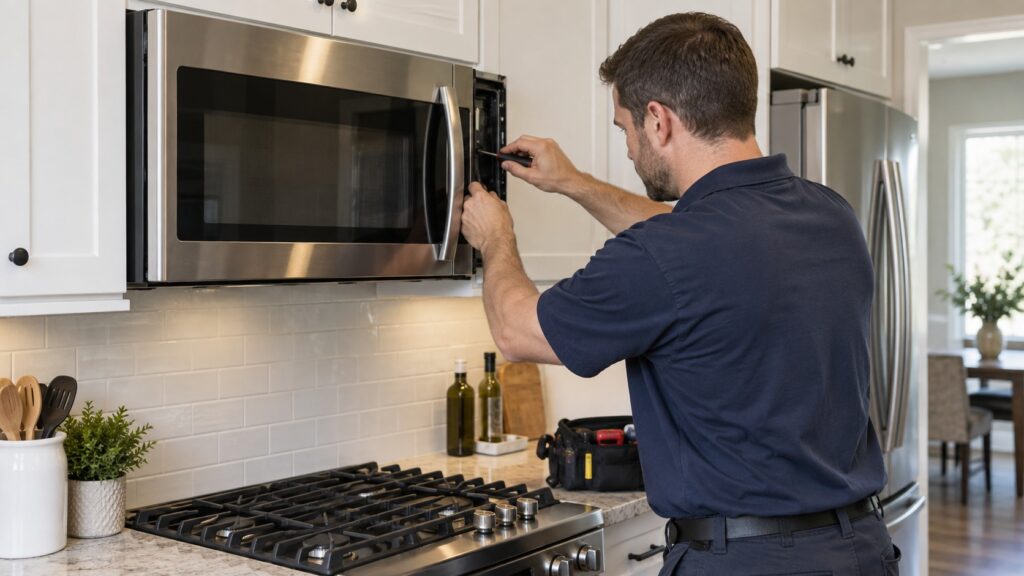
Maytag microwave installation clearances matter most on an over-the-range model, where the microwave sits directly above a cooking surface and needs a minimum gap to the cooktop below plus clear venting above it — getting either measurement wrong doesn’t just look off, it creates a real heat and fire safety issue and can trigger the microwave’s own thermal protection to shut it down mid-use.
Why does the clearance above the cooktop matter so much?
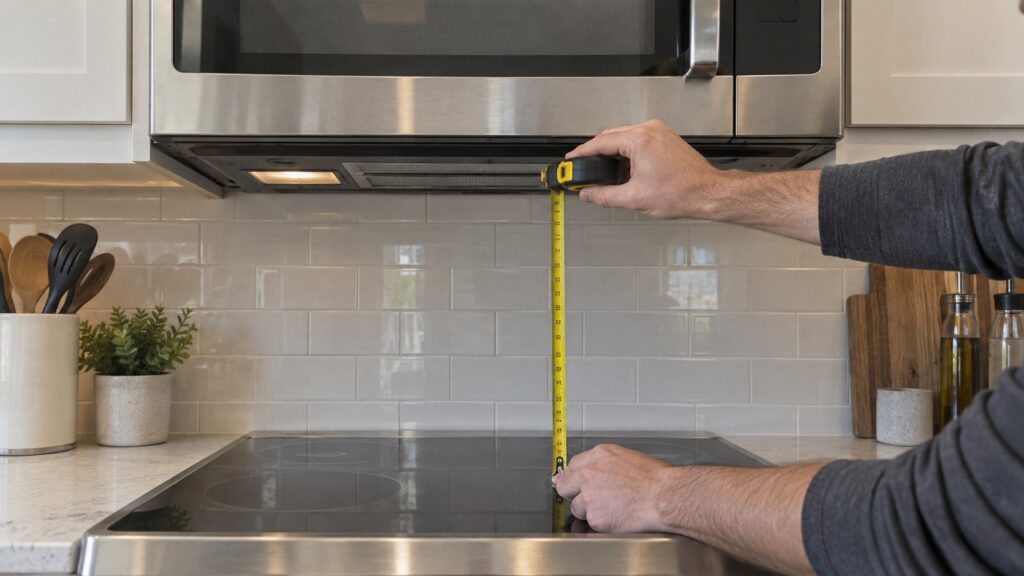
An over-the-range microwave sits close enough to a working cooktop that heat rising from pots and pans below reaches the microwave’s underside directly, and the minimum clearance specified in your model’s installation manual is calculated around how much heat the unit can tolerate without its internal components degrading over time. Installing the microwave lower than that minimum — sometimes done to fit a shorter run of upper cabinets, or because the previous appliance sat lower — exposes the microwave to more heat than it’s designed for on every single use of the cooktop, not just occasionally. Over time that accelerated heat exposure shows up as control board issues, display problems, or premature failure of components mounted closest to the bottom of the unit. This is worth confirming against your specific model’s manual rather than assuming clearance requirements are roughly the same across every over-the-range microwave, since they vary by model and by the cooktop’s own output.
What happens if the microwave is mounted with the venting blocked or restricted?
An over-the-range microwave doubles as your range hood, venting cooking exhaust either outside through ductwork or recirculating it through a charcoal filter, and restricting that path — a duct run that’s too long, too many tight bends, or a filter that’s blocked with grease — forces the exhaust fan to work harder while removing less steam and grease from the air above your cooktop than it’s designed to. Beyond reduced venting performance, a badly restricted exhaust path can also let heat build up around the microwave’s own components rather than moving through and away as designed. If your microwave’s fan sounds like it’s straining, or grease and moisture seem to linger over the cooktop despite the fan running, checking the vent path for kinks or blockages is a reasonable first step before assuming the fan motor itself has failed.
How much side clearance does an over-the-range microwave actually need?
Side clearance to adjacent cabinets is specified in your model’s manual and generally exists for two reasons: giving the door room to open fully without striking a cabinet, and keeping the microwave’s side vents — if your model has them — clear enough to draw in air for cooling the magnetron and other internal components. A microwave squeezed tightly against a cabinet on one side may still open and close fine day to day, but restricted side airflow contributes to the same kind of heat buildup that under-clearance below the unit causes, just from a different direction. If you’re installing into an existing cabinet opening built for a different, smaller microwave, it’s worth remeasuring against your new unit’s specific clearance numbers rather than assuming the old opening’s dimensions were generous enough for any replacement.
What does the mounting itself actually need to support?
An over-the-range microwave is considerably heavier than a countertop model, and it’s held in place by a combination of a wall-mounted bracket and physical support from the upper cabinet it sits beneath — most installation kits include a template for positioning the bracket correctly and hardware for securing the unit to the cabinet above. Skipping proper wall anchoring in favor of relying on the cabinet screws alone, or vice versa, leaves the unit under-supported for its actual weight, which can loosen over time from the vibration of normal door opening and closing and the microwave’s own fan running. Following the installation template exactly, rather than eyeballing bracket placement, is worth the extra time it takes compared to redoing the mount later.
What electrical setup does the installation need?
Microwaves in this class draw enough power that a dedicated, properly rated circuit is standard rather than optional — sharing a circuit with other kitchen equipment risks nuisance tripping at best and, at worst, running the microwave on a circuit that isn’t rated for its actual draw. If you’re replacing an older microwave that was on a shared circuit without issue, that doesn’t guarantee a newer, possibly higher-wattage unit will run the same way; it’s worth confirming your specific model’s electrical requirement against what your kitchen’s wiring actually provides before installation day rather than after the new unit is already mounted.
Does replacing an older microwave with a new one ever mean the existing opening won’t work?
It can, and this is one of the more common surprises during a replacement installation. Cabinet openings and clearance requirements have shifted somewhat across generations of over-the-range microwaves, and a new unit’s depth, width, or venting connection point does not automatically match an opening built years ago for a different model. Before ordering a replacement, measure the existing opening against the new model’s installation template rather than assuming that “over-the-range microwave” is a single standard size. A unit that is even slightly deeper than the one it replaces can end up sitting closer to the cooktop than its clearance requirement allows, even though the cabinet opening itself looks unchanged.
Once your Maytag microwave is properly installed with correct clearances, our microwave cleaning and maintenance guide covers the upkeep that keeps venting and cooling performance consistent, and our microwave not heating guide covers troubleshooting if something goes wrong after installation. Our how a Maytag over-the-range microwave works guide is useful background on the venting and sensing systems this installation supports. If you’d rather have a professional confirm clearances and mounting before or after installation, our technicians can schedule a visit and check the setup against your specific model’s requirements.