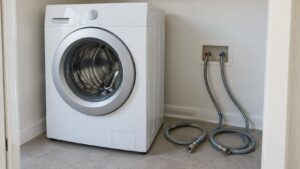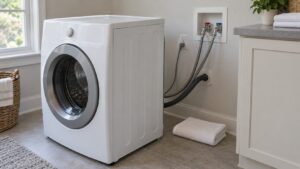
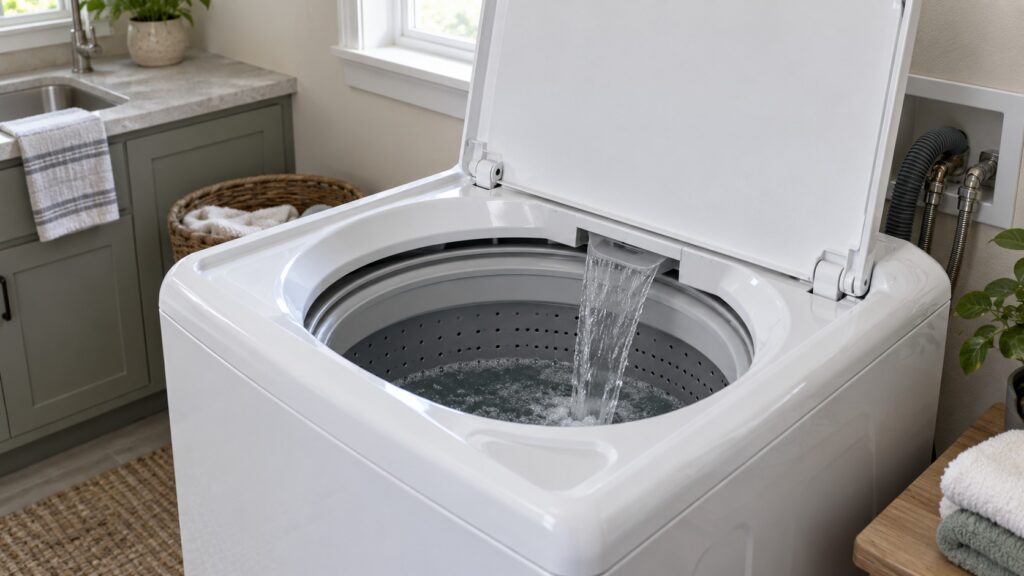
The Maytag washer inlet valve works as the gate between your home’s water supply and the washer. Hot and cold hoses connect your wall valves to the valve at the back of the washer, and the control opens it with an electric signal when the cycle calls for water, picks hot, cold or both for the temperature you chose, and closes it again when the water level sensor says the tub has enough. A weak, slow or leaking fill usually points to the screens, the hoses or the valve, in that order of likelihood.
What does the water inlet valve do in a Maytag washer?
It lets water in only when the washer asks for it. The two hoses at the back of the washer, one hot and one cold, end at the inlet valve. Inside the valve are electrically operated gates, called solenoids, that stay shut until the control sends power. When the cycle needs water, the control opens the hot gate, the cold gate or both, depending on the temperature setting, and water flows through to the dispenser and into the tub. The valve is plumbing and electronics in one small part, and every fill depends on it.
The same valve is why the washer cannot fill without power: if the control does not send a signal, the gates stay closed, and a washer that is not getting a signal looks like one that has no water. Our Maytag washer control panel problems guide covers what a control that does not respond looks like.
How does the washer know when to stop filling?
A level or pressure sensor measures the water in the tub. When the level reaches the amount the cycle needs, the control stops the signal and the valve closes. Our Maytag washer error codes reference describes one situation where this goes wrong: the sensor detects an abnormally high level and the washer stops filling as a safety measure, which it says can be caused by an inlet valve that does not close or a malfunctioning pressure sensor. It also describes a fill timeout, when the washer did not fill enough within the allotted time.
That shows the two ways a valve can fail. It can stay shut or open too slowly, and the tub fills slowly or not at all. Or it can fail to close, and water keeps coming in. A washer that keeps taking in water needs attention at once: close both wall valves and stop the cycle.
What are the screens at the hoses for?
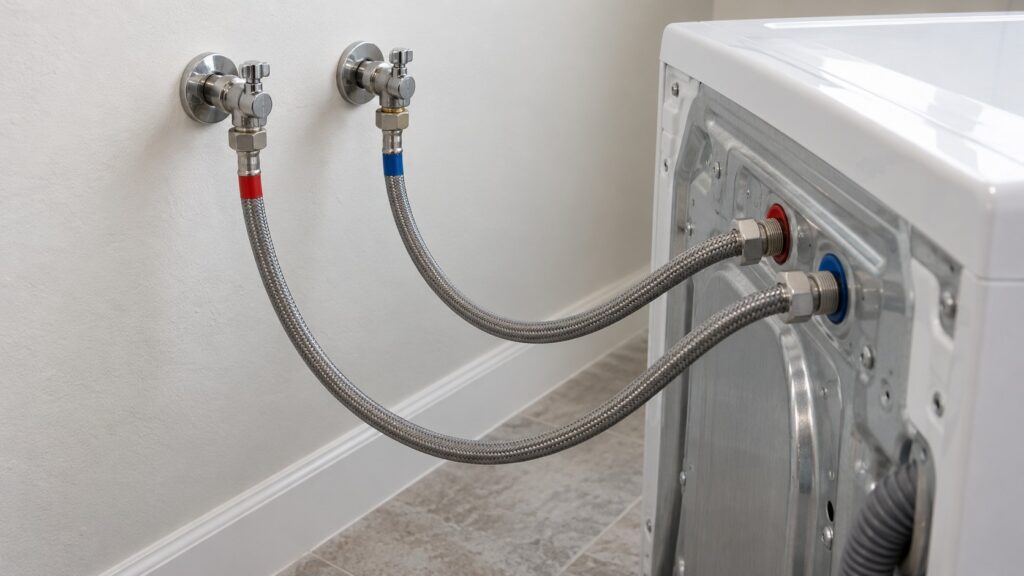
At each hose connection to the washer there is a small, fine-mesh screen. It catches grit, rust flakes and mineral scale from the water supply before they can reach the valve, where they could jam it or stop it closing. Our error codes reference describes them as fine mesh filters at the valve connections and says to check them for mineral deposits when the washer is slow to fill. A screen that is clogged makes the valve look weak: the fill takes longer, with a lower flow. Our companion guide on cleaning the Maytag washer inlet valve screens shows how it is done.
What are the signs of a failing inlet valve?
A slow fill, a fill with only hot or only cold water, water that keeps running after the cycle should have stopped, a humming or buzzing at the back when the washer fills and a drip at the back of the washer. Our Maytag washer leaks guide says leaks at the back typically come from the fill hoses or the valve itself, and that a valve body can crack, especially in freezing conditions or after a water hammer event. A cracked valve must be replaced. The valve sits behind a rear panel, so it is not an owner’s repair.
Before you suspect the valve, rule out the simple things: both wall valves fully open, hoses not kinked behind the washer and no other tap running that is robbing the pressure.
How do hoses and wall valves affect the fill?
The valve can only pass what the house gives it. Closed or partly closed wall valves, a kinked hose and a clogged screen all limit the flow. Our leaks guide recommends inspecting fill hoses every six months and replacing them every five years, and our installation guides recommend braided stainless steel hoses over rubber. Hand-tighten the hose couplings plus a little extra, and check the rubber washers inside each fitting, since those flat gaskets can go stiff, crack or flatten and let water seep.
When you leave home for a long time, closing the wall valves takes the pressure off the hoses and the valve. Switch the washer off first.
What is safe for you to check, and what is not?
Check that the wall valves are open, look at the hoses and connections for wet spots and make sure the washer is level. Do not remove the back panel, and do not test the valve with a meter. The valve is wired to the control, and it works with water and mains power in the same place. If water has reached an outlet or the cord, switch off the breaker at the panel while standing on a dry floor and never pull a plug from a wet outlet.
When should you call a technician?
Call if the washer fills slowly after the screens and hoses are checked, fills with the wrong temperature, keeps taking in water, leaks from the back or hums without filling. Tell the technician your model number and how the problem shows. Our Maytag washer repair page explains how a visit works.