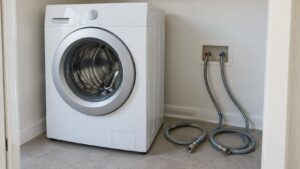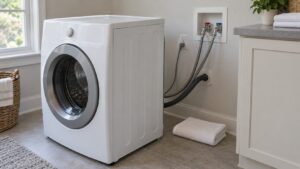
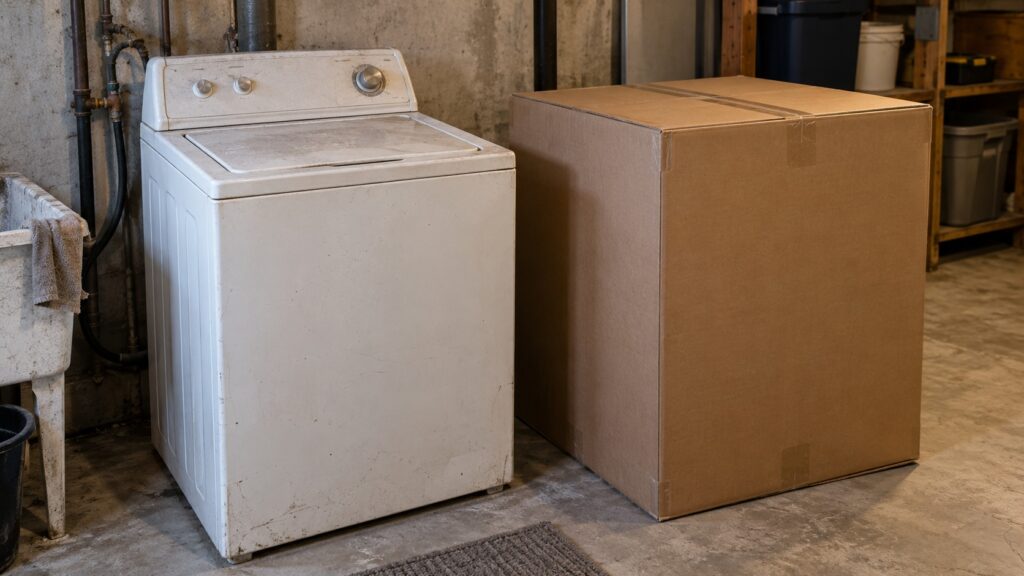
A Maytag 30 year washer is worth fixing only when the problem is one small, accessible wear part and the rest of the machine is sound: a quiet spin, a tub that holds water, no rust through the cabinet. It is usually not worth fixing when the trouble is in the drum bearings, the tub or the drive, or when it is the second or third repair in a short time. At that age you are past the point where our own lifespan figures apply.
Is a 30-year-old Maytag washer worth fixing?
The honest answer starts with the arithmetic on our own pages. Our Maytag washer repair or replace guide says Maytag front-load washers last 10 to 14 years with proper maintenance, and our appliance lifespan guide puts top-loaders at 12 to 14. A washer that has run for 30 years has already lived more than twice that. Plenty of old Maytag machines keep going, and that is why people search for them, but a machine that old is a different case from the ones we write averages for.
We do not have a published figure for what a 30-year-old unit costs to repair, or for how long its parts stay available, and we will not invent one. A technician can tell you after looking at it. What we can give you is the same framework we use on younger machines, adjusted for the fact that everything inside has been working for three decades.
What is the first thing to find out?
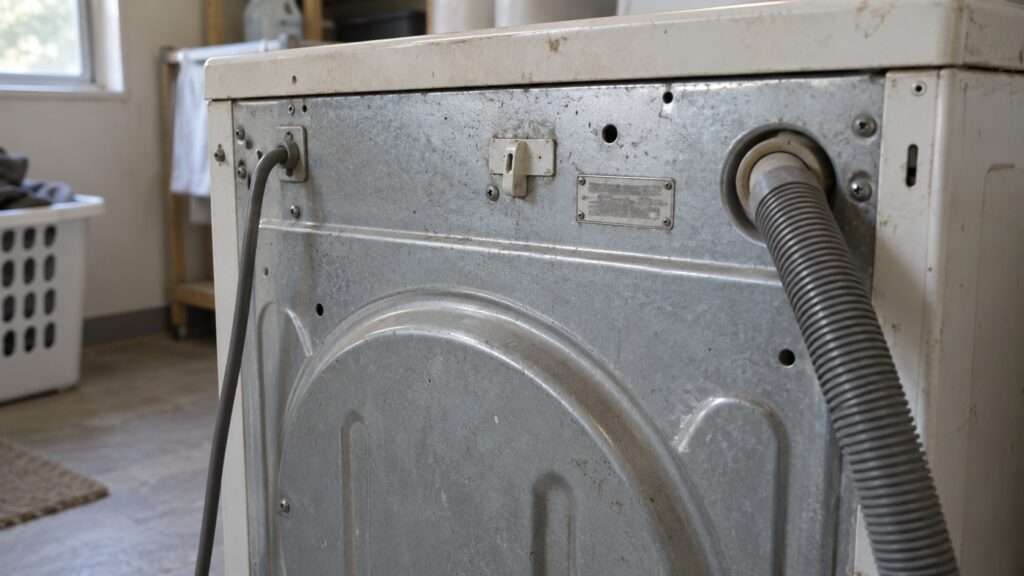
Find the rating plate. Our repair guides say it is typically inside the door, on the back panel or along the side wall, and it carries the model number, the serial number and the production date. If a listing, a previous owner or a neighbor told you the washer is 30 years old, check the plate rather than repeating the story; the real age decides which advice applies. Take a clear photo of the plate. A technician will ask for the model and serial number before anything else, because parts are ordered by them.
We do not decode serial numbers here. How a Maytag serial number encodes the year is a question for the manufacturer’s own documentation, not for this page.
Which repairs can make sense on an old washer?
Small, contained parts are the ones to consider. A drain pump that has stopped moving water, a lid switch, a hose that has cracked or a water inlet screen choked with grit all belong to this group. Our pages call items like a door lock, a drain pump and shock absorbers maintenance items rather than terminal failures on machines under 10 years old. On a 30-year-old washer the same repair can still be sensible, but only if nothing else on the machine is failing. A drain issue is a good example; start with our drain pump filter cleaning guide, because a clogged filter costs you nothing.
Before you spend money, ask whether the part is available for your model and what the whole job includes. Ask for a firm quote after diagnosis, and weigh it against a new washer, not against what the repair would have cost years ago.
Which problems usually mean replace?
Our guide calls the drum bearings the lifespan-limiting component, and the bearing test is simple. With the washer off and empty, grab the drum and try to rock it. Our page says play of more than a quarter inch means worn bearings, and a rumble or grind during spin confirms it. Bearing work is a major job, and our framework says bearing failure at 10 years or more usually points to replacement. On a 30-year-old machine we would apply that rule to anything involving the tub, the bearings, the transmission or the drive.
The other warning sign is a pattern. One repair on a mid-life washer is normal. Several in a short time mean the machine is declining. Our repair-or-replace guide notes that on a bearing job at 10 years or more the cumulative repair cost often exceeds 60 to 70 percent of a new unit, and our lifespan guide describes the “replacement zone” as starting at 75 percent of expected lifespan. A 30-year-old washer is far inside it. Rust through the cabinet, a tub that leaks and a cracked cabinet panel point to replacement as well.
What does keeping an old washer cost besides repairs?
Think about the things a repair quote does not include. An old machine can leak, and a leak from a washer in a basement or laundry room can damage a floor or a wall far beyond the cost of the machine. Keep an eye on the hoses regardless of what you decide, and replace old supply hoses. We do not have verified figures on how much water or energy an old Maytag uses compared with a new one, so check the label on a new model and compare it with what you pay.
It also helps to have a plan for the day it fails. If the washer is in a spot where a leak can do damage, switch off the water at the valve after each wash and be ready to replace instead of repair.
How do you decide?
Use four questions. Is the problem a small part? Is the machine otherwise quiet, dry and free of rust? Is this the first repair in a long while? Is a firm quote clearly below the cost of a new washer? If the answer to all four is yes, repair can be a fair gamble. If any is no, replace. If you are not sure, a diagnostic visit will tell you what is wrong and what it takes to fix it. We are an independent repair company, so we are not selling you a washer. Our washer repair page explains the visit, and you can book a visit online. Our washer repair cost guide gives the range of jobs. Shut the water off before you move the washer, and do not open the cabinet yourself; if there is water on the floor near the outlet, switch off the breaker at the panel from a dry spot rather than pulling the plug.