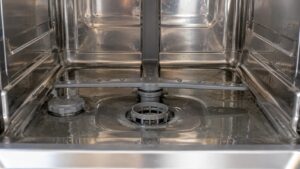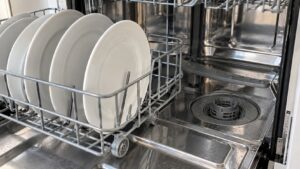
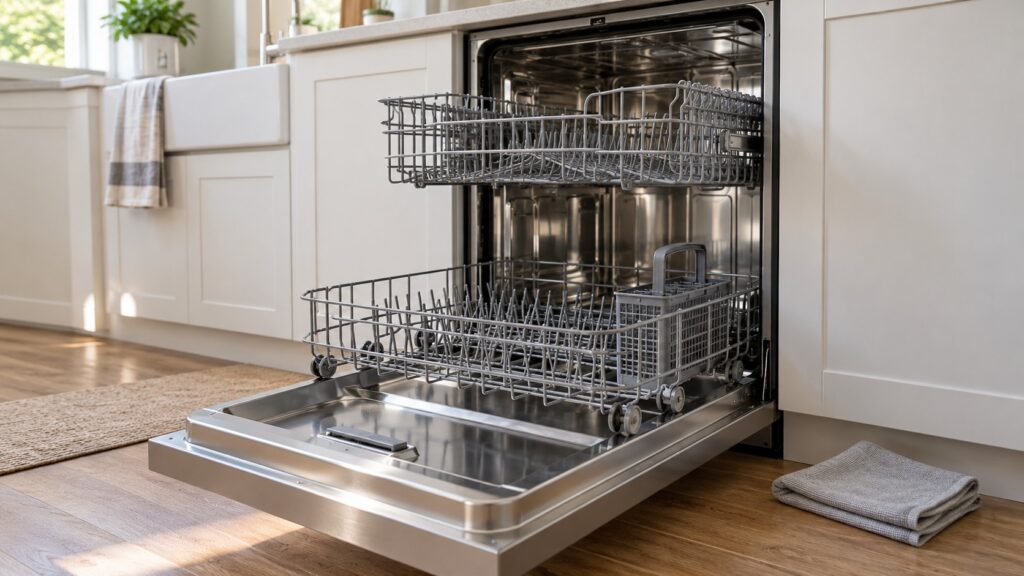
Maytag dishwasher cleaning is more than rinsing the filter. Over months, grease film, food in the corners, rubber-seal grime and hard-water scale build up in places the wash water barely reaches, and they are what cause cloudy glasses, gritty plates and that stale smell when you open the door. This guide covers the whole inside of the machine: the tub walls, the door edges and seal, the spray arms, the drain area and the scale, and it gives a safe way to run a cleaning cycle on a model such as the MDB8959SKZ with its Dual Power Filtration.
Why does a Maytag dishwasher need cleaning if it washes dishes?
A dishwasher washes dishes, not itself. The wash water carries grease and food particles through the filter, but a thin film of grease clings to the tub walls, and soft food settles around the door edges, the lower seal and the drain. When the machine dries, that film and those crumbs sit in a warm, damp box, and they smell. In areas with hard water, minerals also leave white scale on the walls, the heating element and the spray arm holes, and scale narrows the openings that the water needs.
The symptoms are familiar: dishes that feel gritty or look cloudy, white deposits on glasses, and an odor that returns a day after you clean the filter. If the machine also fails to drain, start with our Maytag dishwasher filter cleaning guide, because that is the quicker fix.
How do you clean the tub, door and seal?
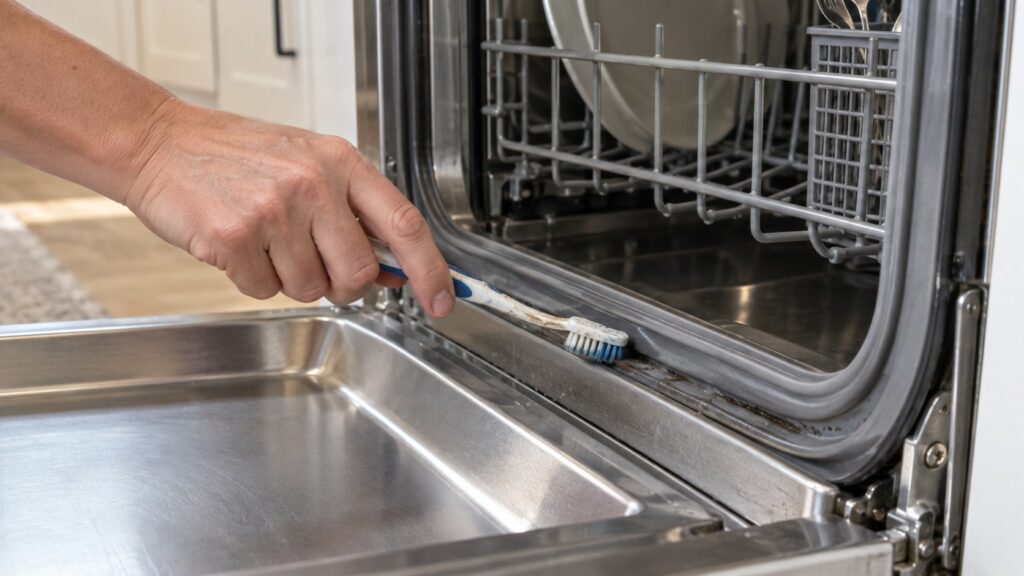
Take out the racks and set them aside. With a soft cloth and warm soapy water, wipe the tub walls, the inside of the door and the bottom edge of the door, where a line of grime collects. Use an old toothbrush on the corners and on the folds of the rubber seal. Lift the seal gently and wipe underneath it, since food hides in the groove. Avoid steel wool and scouring powder, which scratch the tub and the seal. Dry the seal with a cloth so it does not stay damp.
Pay attention to the door latch area and the rinse-aid dispenser cap. Sticky residue there can make the door close poorly or the dispenser leak, which our rinse aid dispenser guide describes.
How do you clean the spray arms and the drain area?
Check the holes in each spray arm and clear any that are blocked with a toothpick. Hard-water scale and bits of food are the usual culprits. Our spray arm maintenance guide shows how to remove and flush the arms. Then look at the drain area at the bottom of the tub: take out the filter, look for labels, seeds, glass chips and bones in the sump, and remove them by hand, being careful of sharp edges. A clean drain keeps standing water from making a smell.
What is the safest way to run a dishwasher cleaning cycle?
Use a cleaner made for dishwashers, and follow its label. Place it where it tells you to, usually in the bottom of the empty tub or in the detergent cup, and run the hottest cycle. If you prefer a household option and your manual allows it, a cup of white vinegar in a dish on the top rack is a common choice for scale, run on a hot cycle with nothing else inside. Never combine vinegar with bleach or with any product that contains chlorine, because the mix releases a harmful gas. If you have used bleach, rinse and run a plain cycle before you use vinegar, or skip vinegar altogether. When in doubt, choose the cleaner your manual names.
How do you deal with hard-water scale?
Scale shows as a white or gray haze on the tub and a crust on the heating element and spray arm holes. A cleaning cycle with a descaling product loosens it, and a refill of rinse aid helps water sheet off glasses so spots form less. Hard water is a problem you can reduce but not remove. If you see scale returning within weeks, a water softener on the house supply is the long-term answer. Scale on the heating element also hurts drying, which is why a dishwasher with heavy scale may leave dishes wet even with the PowerDry option on.
How do you keep it clean between deep cleans?
Scrape plates, but do not rinse them to a shine, because modern detergent works best with some soil. Clean the filter every month or two. Leave the door ajar for an hour after a cycle so the tub dries instead of staying humid. Run the hot tap at the sink before you start the dishwasher so the first water in the tub is hot. Do not overload the racks, since blocked spray arms leave soil on the dishes and in the tub.
If the machine still smells, leaks or leaves gritty dishes after a full cleaning, the cause may be a failing pump or a damaged seal. Our heating element guide covers one of the common causes of poor drying and cleaning. We are an independent repair company, not the manufacturer. Our Maytag dishwasher repair service can check the pump, the seals and the heater, and you can book a visit online.