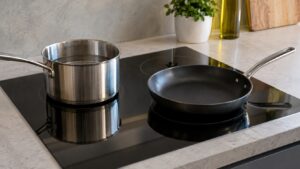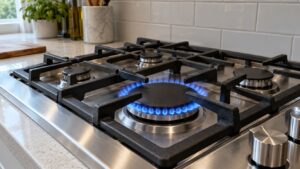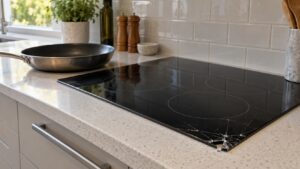
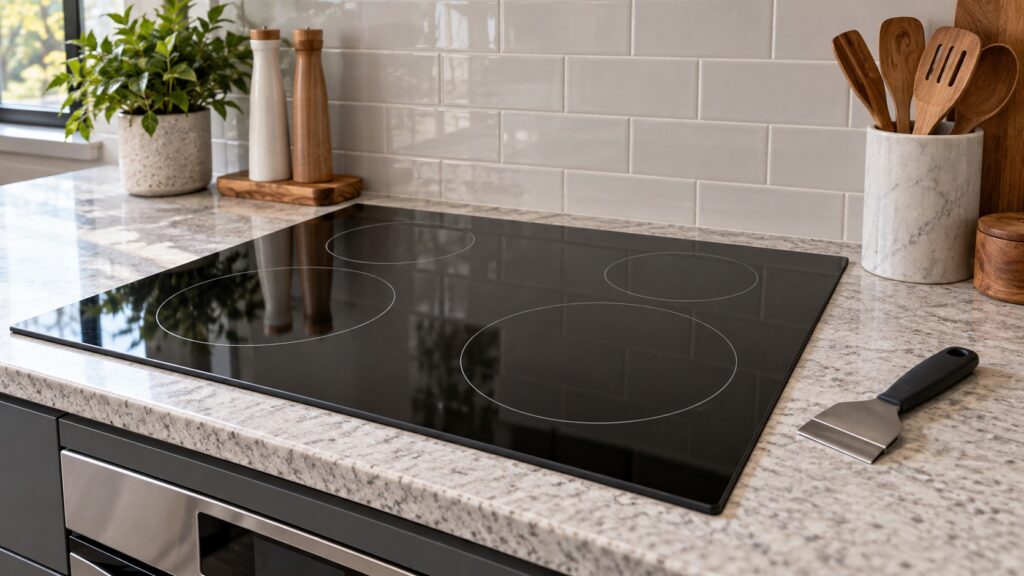
Maytag cooktop maintenance differs meaningfully depending on whether you have a smoothtop, gas, or induction surface — a cleaning method or product that’s perfectly safe on one type can scratch, discolor, or otherwise damage another, and the single most common cooktop maintenance mistake is using a generic all-purpose cleaner or an abrasive pad across all three without checking which surface you actually have.
How should you clean a smoothtop Maytag cooktop without scratching it?
A ceramic glass smoothtop surface is more delicate than it looks, and everyday cleaning tools that work fine on a countertop or stainless steel can leave permanent fine scratches on glass. Once the cooktop has cooled fully, a dedicated cooktop scraper held at a low angle lifts off stuck-on, cooked-on spills without gouging the glass, and a cleaner formulated specifically for ceramic glass cooktops — rather than a generic multi-surface cleaner — dissolves residue without leaving a hazy film behind. Avoid steel wool, scouring pads, or any cleaner containing abrasive grit; even a cleaner marketed as gentle can still scratch glass if it contains fine abrasive particles meant for tougher surfaces. Our guide on how to clean a Maytag cooktop covers this cleaning routine step by step.
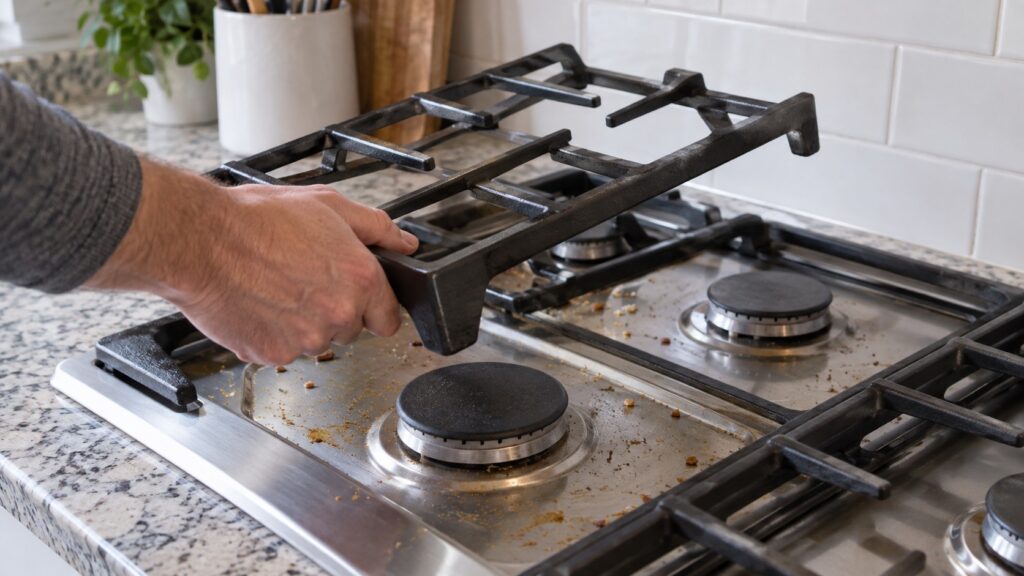
What maintenance does a gas cooktop’s burners actually need?
Gas burner caps and the grates that sit above them can usually be lifted off for cleaning separately from the cooktop’s main surface, and that separation matters because burner ports — the small holes gas passes through to ignite — clog with cooked-on spill residue over time in a way that directly affects ignition and flame quality. A soft brush or a toothpick-sized tool worked gently through visibly clogged ports clears debris without enlarging or damaging the port opening; avoid anything metal and rigid enough to widen a port, since that changes how the burner performs even after cleaning. If a burner is clicking but not lighting, or lighting unevenly around the ring, clogged ports are worth checking before assuming an ignition component has failed — our burner not igniting guide covers that troubleshooting in more detail.
Does an induction cooktop need different maintenance than a standard smoothtop?
The surface cleaning approach is largely the same as a standard glass smoothtop — a dedicated scraper and ceramic-glass-rated cleaner, no abrasive pads — since induction cooktops use a similar glass surface even though the heating mechanism underneath is entirely different. What’s specific to induction is cookware: induction only heats cookware that’s magnetic, and using non-compatible pots or pans doesn’t damage the cooktop, but it also won’t heat properly, which can look like a cooktop malfunction when it’s actually a cookware mismatch. Our how Maytag induction cooktops work guide covers that compatibility question and the underlying mechanism in more detail if you’re new to induction cooking.
How often should routine cooktop cleaning actually happen?
Wiping the surface after each use — once it’s cool enough to touch safely — prevents spills from baking on and becoming a deeper cleaning job later, regardless of which surface type you have. Beyond that daily habit, a more thorough weekly clean, or an immediate clean after any significant boil-over or grease splatter, keeps residue from accumulating in the places routine wiping tends to miss: burner ports on a gas cooktop, or the edges where the cooktop meets the countertop trim on any type. Letting spills sit for days rather than addressing them promptly is the single biggest factor in whether cooktop maintenance stays easy or becomes a scrubbing project.
What signs suggest a cooktop needs more than routine cleaning?
A burner that won’t heat or ignite despite clean, clear ports points at an electrical or ignition component issue rather than something cleaning will fix — our cooktop not heating guide covers that troubleshooting separately from routine maintenance. Persistent discoloration or a hazy film on a smoothtop surface that doesn’t respond to a proper ceramic-glass cleaner may indicate the surface itself has been damaged by an incompatible cleaner used previously, which unfortunately isn’t always reversible once it’s set in — a reason to be careful about product choice from the start rather than trying to correct it later.
Is it worth having a cooktop professionally serviced as part of routine care?
Most cooktop maintenance is genuinely a DIY routine — cleaning, checking burner ports, using the right products for your surface type. Where a professional visit adds value is confirming ignition components are working correctly on a gas cooktop, checking induction coil function if heating seems inconsistent despite compatible cookware, or diagnosing a smoothtop element that’s heating unevenly. If your cooktop’s maintenance routine has been consistent but you’re still seeing performance issues, that’s the point where a technician visit makes more sense than continuing to troubleshoot cleaning-related causes.
Are there any cleaning products that should be avoided entirely, regardless of surface type?
Chlorine bleach and ammonia-based cleaners are worth keeping away from any Maytag cooktop surface, smoothtop, gas, or induction, since both can discolor or degrade the trim, seams, and finish around the cooktop even when the main cooking surface itself would tolerate them. This matters most at the edges where the cooktop meets the countertop, and around control panel seams, where these chemicals can sit longer than they would on an open, easily wiped surface. If a stain or discoloration shows up after using either product, it is often set into the finish rather than something a follow-up cleaning removes.
Does the cooktop’s control panel or knobs need any maintenance of their own?
Yes, though it is easy to overlook next to the surface itself. Touch controls on a smoothtop or induction cooktop can become less responsive if spills seep into the seam between the glass and the control panel, so wiping that seam dry after any spill matters as much as cleaning the cooking surface. On a gas cooktop, physical knobs benefit from an occasional pull-and-clean underneath, since grease and food residue that collects around the knob shaft over months can make a knob feel stiff or catch slightly when turning it, well before that stiffness would ever suggest a real valve problem. Keeping this area clean alongside the main cooking surface avoids mistaking a residue issue for a control failure later on.