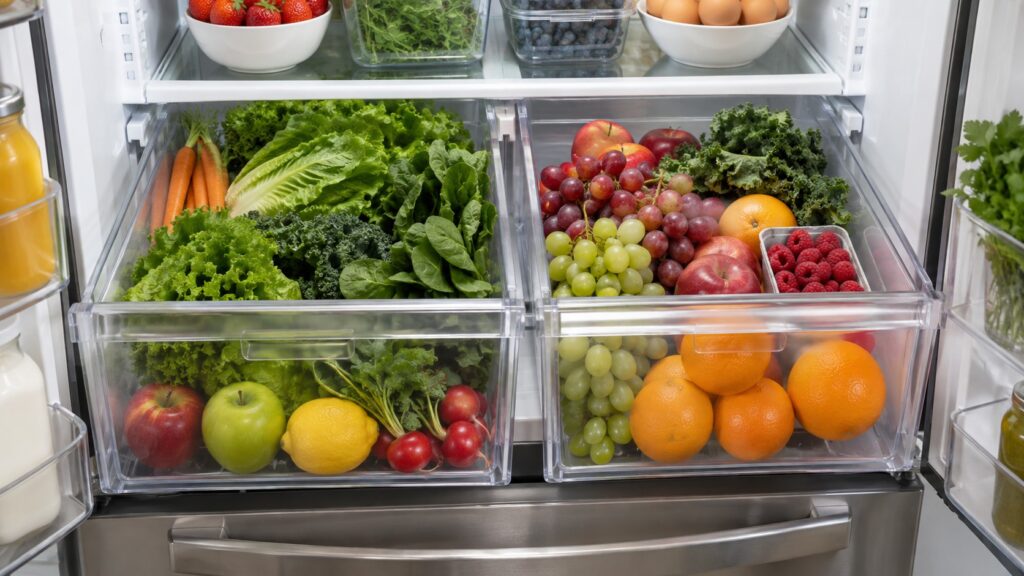
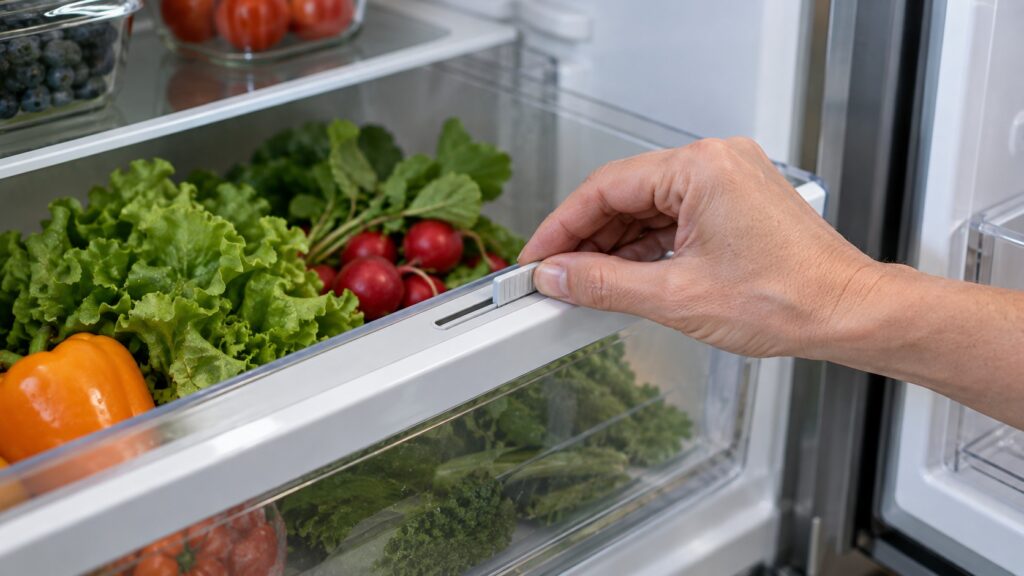
The maytag freshlock crispers are the two drawers at the bottom of the refrigerator with a slider on the front, and almost everyone uses them wrong — not because the drawers are complicated, but because nobody explains what the slider does. It is not a temperature control. It is a vent, and once you know that, the rest of the guidance falls into place.
Wilting and rotting are two different problems
Produce fails in one of two ways. Leafy vegetables lose water to the surrounding air and go limp — that is wilting, and the answer is to keep moisture in. Fruit gives off ethylene gas as it ripens, and in still, humid air that gas accumulates and accelerates everything nearby, including itself — that is rotting, and the answer is to let air move.
One drawer cannot do both, which is exactly why there are two. Closed slider for the wilters, open slider for the rotters, and the single most useful habit is simply keeping fruit and vegetables apart.
Which drawer for what
- Slider closed, high humidity: lettuce and salad leaves, spinach, kale, herbs, broccoli, cauliflower, carrots, celery, green beans, asparagus, zucchini.
- Slider open, low humidity: apples, pears, peaches, plums, avocados, melons once cut, and anything already ripe that you want to slow down.
- Not in a drawer at all: tomatoes, potatoes, onions, garlic, bananas and whole winter squash. Cold does these no favors and tomatoes lose flavor permanently.
- Keep separate regardless: onions away from potatoes, apples away from everything you want to keep.
If you only remember one rule, make it the apples one. Apples are among the strongest ethylene producers in a normal refrigerator, and a bag of them in with the greens will cut their life by days.
Small habits that matter more than the setting
Do not wash produce before storing it. Surface water on leaves is the fastest route to slime, and the drawer is already doing the humidity work for you. Wash at the point of use instead.
Line the high-humidity drawer with a dry paper towel and change it when it feels damp. It absorbs the condensation that would otherwise sit against the leaves, and it costs nothing. Herbs do better standing in a small jar of water with a loose bag over them than lying in a drawer at all.
Keep the drawer roughly two thirds full. A nearly empty drawer has too much air for the small amount of produce to humidify, and an overpacked one blocks the vent it depends on.
How long things should actually last in there
Used properly, the high-humidity drawer keeps salad leaves usable for about a week rather than two or three days, and herbs noticeably longer than a bag on a shelf. Carrots and celery will go two to three weeks. Broccoli and cauliflower a week or so before the florets start to yellow.
The low-humidity drawer is doing a different job: it is not extending life so much as slowing the slide. Apples hold for weeks there, pears and stone fruit for days once ripe, avocados for several days past the point they would have gone on the counter. If something is ripening faster than that, it is usually sitting next to something that is gassing it.
Where the cold actually comes from
Crisper drawers do not have their own cooling. They sit in the coldest part of the fresh food compartment and are insulated from the air movement above them, which is what lets humidity build inside. That means two things.
First, the compartment’s overall temperature setting still governs the drawers — if the fridge is set too cold, produce in the crispers will get chilling injury whatever the sliders are doing. Our temperature settings guide covers where it should sit.
Second, the fast-chill option drives the whole compartment below its normal set point, and produce is what notices. Our PowerCold guide explains that trade-off.
Cleaning the drawers without damaging them
Pull the drawer fully out — most lift clear once past the stop — and wash it in warm water with a mild dish liquid. Avoid hot water on a cold drawer, because the temperature shock can crack the plastic, and avoid bleach and abrasive powders entirely.
Dry it completely before it goes back. Clean the rails and the glass shelf above it while the drawer is out, since that shelf is where spills sit and then drip down. A drawer that has started sticking is usually a dirty rail rather than a broken one.
When the drawer is not the problem
If produce is freezing in the crisper, or if there is water pooling in the bottom of the drawers, the drawers are reporting a fault elsewhere. Freezing means the compartment is running too cold, or a damper is stuck open. Standing water usually means a blocked defrost drain, which will eventually find its way to the floor.
Food spoiling quickly throughout the fresh food side — not just in the drawers — points at temperature, airflow or door seals rather than storage habits. Our not cooling guide is the place to start on that.
When to call
Call when produce freezes with the compartment set correctly, when water collects in the drawers or under them, when the fresh food side will not hold temperature, or when a drawer rail or track has broken rather than simply stuck.
We are an independent repair company and not a factory service arm. Pricing starts from a diagnostic visit and we confirm the estimate before any work begins. Maytag refrigerator repair covers cooling, defrost, dampers and drainage, and you can schedule a visit online.