
The Maytag PowerCold button is the fast-chill option on Maytag refrigerators. Press it and the compressor runs flat out with the fans at full speed for a set period, driving both compartments colder than their normal set point before returning to ordinary operation. It exists for one situation — a large amount of warm food arriving at once — and understanding what it actually does explains both why it helps and why leaving it on permanently is a bad idea.
What is happening inside
A refrigerator normally cycles. The compressor pushes refrigerant through the system until the compartment reaches its target temperature, the control cuts it, and the cabinet drifts warm again until the next call for cooling. That cycling is deliberate: it keeps temperature steady while using the least energy.
PowerCold suspends the cycling. Rather than stopping when the target is reached, the system keeps running and pushes past it, building a reserve of cold in the food and in the cabinet mass. When the period ends, that reserve is what absorbs the heat load you are about to add.
Why the timing matters more than the button
Most people press it when they get home and start unloading. By then the door has been open repeatedly, warm air is inside, and warm food is already sitting on the shelves. The option still helps, but it is now fighting a problem rather than preventing one.
Press it before you leave for the shops instead. The cabinet runs cold while you are out, and the reserve is waiting when the groceries arrive. Same button, considerably better result, and the compressor does less total work for it.
Where the cold actually goes
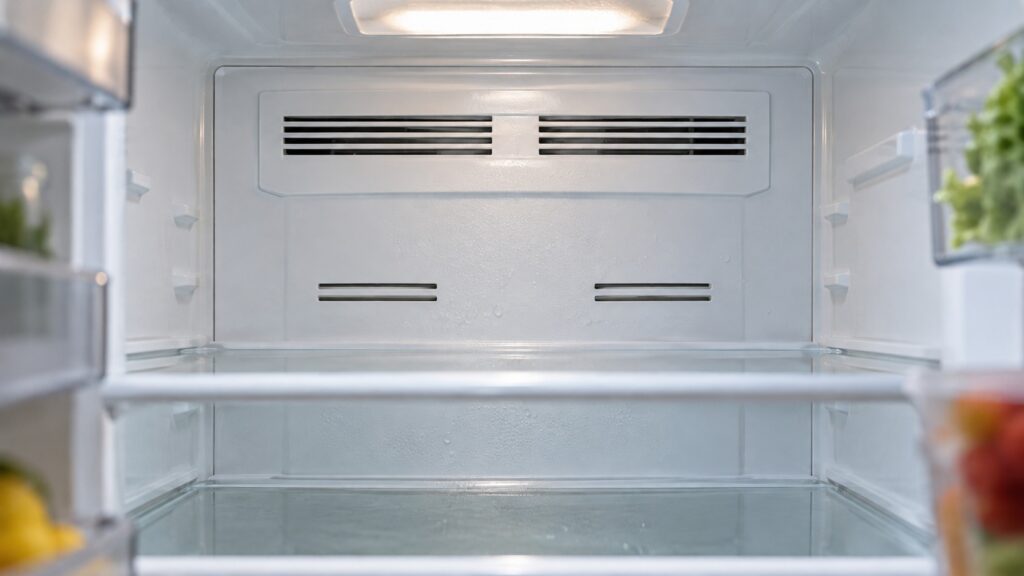
Cold air is produced at the evaporator behind the freezer wall and distributed by a fan through ducts to both compartments. A damper controls how much reaches the fresh food side. The important consequence: cooling depends on airflow, and airflow depends on the vents being clear.
Pack shelves tight against the rear wall and you block the very vents the option is trying to use. The compressor runs, the fan runs, the energy is spent, and the air never reaches where you needed it. Leave a finger’s width of clearance at the back of each shelf and everything downstream works better.
What it does to produce
Driving the fresh food compartment below its normal set point is fine for dairy and meat, and less fine for produce. Lettuce and herbs suffer chilling injury near freezing, and some fruit turns mealy. A crisper drawer is somewhat insulated from the swing, which helps, but a long fast-chill period with the drawer half empty can still take it further than you want.
Our crisper humidity guide covers how the drawers actually control moisture, which matters more for produce than the headline temperature.
The mistake that hides a fault
The pattern we see on service visits: the fridge has been drifting warm for months, someone discovers the fast-chill button helps, and it gets pressed every day. What that is really doing is masking a fault by running the compressor harder.
The likely causes are not exotic. Condenser coils choked with dust mean the system cannot reject heat, so it runs constantly and never quite gets there. A door gasket that no longer seals lets warm room air leak in around the clock. A defrost fault leaves the evaporator progressively frosted so the fan is blowing through ice. A condenser fan that has stopped turning produces exactly this symptom too.
All four look like “the fridge needs a bit of help”, and all four get worse. Our condenser coil cleaning guide covers the first and cheapest of them, which is a job you can do yourself in twenty minutes.
Checks worth doing before you blame the option
- Measure, do not guess. Put a thermometer in a glass of water on the middle shelf overnight — that reads the food temperature rather than the air, which swings every time the door opens.
- Test the gaskets. Close the door on a banknote. If it pulls out with no resistance anywhere along the edge, the seal has gone there.
- Look at the coils. Underneath or at the back, depending on the model. A gray felt of dust is the single most common cause of poor cooling.
- Listen. A compressor that never stops is telling you something, and so is one that starts and stops every few minutes.
Energy, noise and what is normal
While the option is active the appliance is louder and uses more power, because that is the whole mechanism. Both should return to normal once the period ends. If they do not — if the compressor simply keeps running after the indicator has cleared — the control is not the problem; something is preventing the compartment from ever reaching its target.
A seasonal caveat worth knowing: in a hot garage or an unconditioned utility room, a refrigerator runs far longer than the same unit in a kitchen, and fast-chill periods feel endless. That is ambient temperature, not a fault.
When to call
Call when the compartment will not hold temperature with clean coils and good gaskets, when the compressor runs without stopping, when you find frost building on the freezer’s rear wall, or when the fresh food side is warm while the freezer stays cold — that last combination usually means airflow or defrost rather than refrigerant.
We are an independent repair company and not a factory service arm. Pricing starts from a diagnostic visit and we confirm the estimate before any work begins. Maytag refrigerator repair covers sealed system, defrost, fans and controls, and you can schedule a visit online.