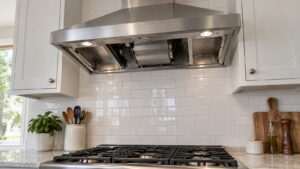

Regular Maytag range hood filter cleaning is the single best thing you can do for airflow and motor life. This guide covers why the care matters, the steps to do it right, and how often to repeat it so your range hood keeps running dependably. As an independent service we use genuine OEM parts and a 30-day labor warranty, and our advice on maytag range hood filter cleaning is honest — including when a fix is simple enough to do yourself.
Why this care matters on your Maytag range hood
The mesh grease filters and the blower do the real work — keep them clean.
- Wash the aluminum mesh filters every few weeks
- Replace recirculating charcoal filters on schedule
- Wipe grease off the blower wheel and housing
- Confirm the exterior damper opens on ducted installs
- Replace failed lights promptly
How to do it, step by step
The aluminum mesh grease filters are dishwasher-safe, or you can soak them in hot water with degreaser and a little baking soda, then rinse and dry. A grease-loaded filter chokes airflow and makes the motor work harder, so this one task prevents most weak-suction and noise complaints. Charcoal filters cannot be washed — they are replaced.
How often to do it
Wipe accessible grease off the blower wheel and inside the canopy so the fan stays balanced and quiet. On a ducted hood, make sure the exterior wall or roof damper opens freely; a stuck damper kills suction even with a clean filter.
Maytag range hood filter cleaning: getting it fixed
Clean filters and a clear duct solve most performance complaints; a hood that stays weak or noisy afterward needs the blower or motor checked. If the problem persists, our experienced technicians diagnose the exact cause and price the job from a diagnostic fee that depends on what failed — never a flat, sight-unseen number. Book Maytag range hood repair, browse related guides, or look up your unit in the models directory.
Frequently asked questions
Is this something I can fix myself? Some of it, yes — the cleaning, resetting, and checking steps above resolve a good share of range hood problems and cost nothing to try. What you should not do is open a sealed system, work on high-voltage parts, or force a stuck mechanism, where the risk of injury or a bigger repair outweighs the saving.
How do I know if it is worth repairing? The honest test is the cost of the repair against the price of a comparable new unit and the age of your range hood. A single-part problem on a newer model is almost always worth fixing; a major component failure on an old, basic unit may not be. We give you that read plainly before any work begins, with pricing that starts from a diagnostic fee and depends on the real problem.
What an experienced technician checks
When a do-it-yourself fix is not enough, an independent technician approaches a Maytag range hood methodically rather than swapping parts on a hunch. They confirm the symptom, read any code or indicator, and test the components most likely to be responsible with a meter — power and connections first, then the specific part the evidence points to. Because we are not tied to a single supplier, we recommend the genuine OEM part that actually fixes the problem and give you an honest read on whether the repair is worth it for your model. That honest, evidence-first approach is how a small problem stays a small bill, and it is why so many Maytag range hoods keep running long past their warranty.
Maytag range hood care and dependability
Maytag builds its range hoods for the long haul, and a little routine attention keeps yours dependable for years. Use genuine OEM parts for any replacement, follow the use-and-care guide for your model, and address small symptoms before they grow. You can confirm details for your model on the manufacturer site at maytag.com, then check coverage on the service areas page for independent Maytag service in all 50 states.