
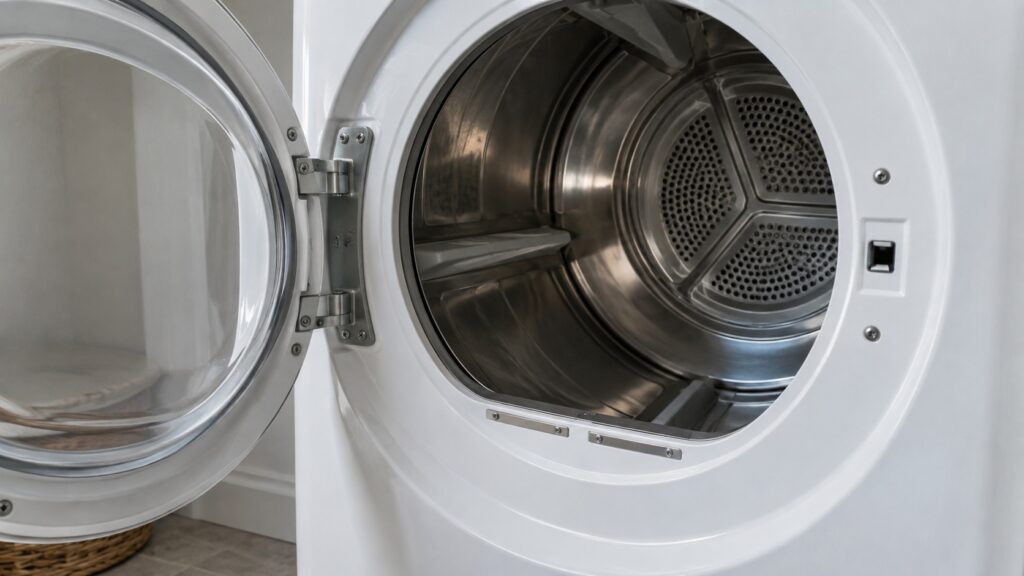
Maytag dryer moisture sensor cleaning means wiping the two thin metal strips inside the drum, usually near the door opening, with a soft cloth and a little rubbing alcohol. Those strips are how the dryer decides when clothes are dry. When a film of fabric softener, detergent residue or dryer sheet wax coats them, the dryer misreads the load and may shut off while clothes are still damp or keep running long after they are dry. A five-minute wipe every few months usually fixes it. This guide shows where the sensor is, how to clean it safely and what to check if it does not help.
What does the moisture sensor do in a Maytag dryer?
Dryers with Advanced Moisture Sensing measure how damp the clothes are rather than just running for a set time. Wet fabric tumbling against the strips completes a tiny electrical circuit; as the clothes dry, the circuit gets weaker, and the control uses that change to end the cycle at the right moment. It saves energy, protects fabric from overdrying and is why a sensor-dried load usually comes out evenly dry. When the strips are coated, the signal they send no longer matches the real dampness of the load.
The result can go either way. A coating can insulate the strips so the dryer thinks the load is dry too early, or it can cause erratic readings that make the cycle run long. Both look like a dryer that has stopped doing its job.
Where are the moisture sensor strips?
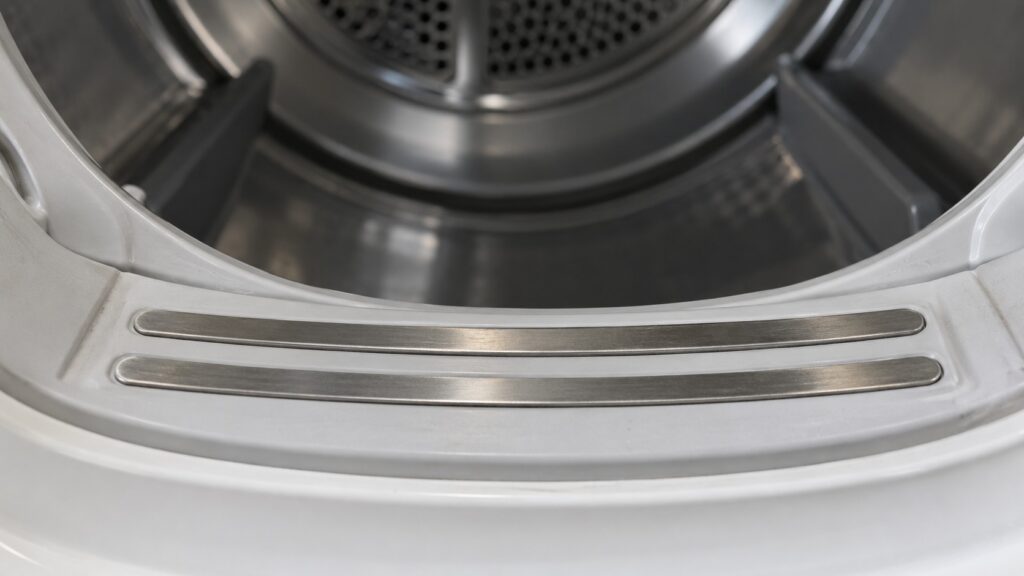
Open the dryer door and look at the drum near the opening. On most dryers you will see two thin metal bars set into the drum lip or the front of the drum, often curved or flat and about the length of a hand. They are not buttons or vents; they look like two parallel stainless strips. The lint screen sits in a different place, at the door or top, so do not confuse the two. If you cannot find strips, look at the back of the drum and at the lint screen housing, or check your owner’s manual for the layout of your model.
How do you clean them step by step?
Unplug the dryer. Wait until the drum is cool to the touch. Dampen a soft cloth or cotton pad with rubbing alcohol, and wipe along each strip firmly, rubbing away the film. A white or yellowish residue will transfer to the cloth. Repeat with a fresh section of cloth until it comes away clean. If the film is stubborn, use a fine, non-metallic scouring pad very lightly; never use steel wool or an abrasive that scratches the metal, because scratches collect residue. Finish with a dry cloth, let the alcohol evaporate for a minute and plug the dryer back in.
Clean the lint screen at the same time. Wash it in warm soapy water and let it dry completely, because the screen can acquire a film too, which blocks airflow. Our Maytag dryer vent cleaning guide covers the next step in the airflow path, which has an even bigger impact on drying time.
What causes the film in the first place?
Mostly fabric softener and dryer sheets. They leave a waxy layer on clothes that transfers to the drum and strips. Too much detergent leaves residue that does the same, and high-heat drying bakes it on. If you cannot give up softener, use less, or switch to wool dryer balls, which soften without a coating. Using the right amount of detergent for a high-efficiency washer also reduces buildup. A dryer used with lots of softener sheets needs its strips cleaned more often than one used without.
How can you tell the sensor is the problem?
Run a test with a small load of damp towels. Start a sensor-dry cycle and check after the time the dryer estimates. If the towels are still wet when the dryer stops, the sensor read the load as dry too early, which points to a coated strip. If the towels are bone dry and the dryer keeps running for a long time, the readings are erratic or the sensor is not detecting the drop in moisture. Compare this with a timed-dry cycle: if a timed cycle dries the load properly but the sensor cycle does not, the dryer’s heating and airflow are fine and the sensor, or the strips’ cleanliness, is the suspect. That quick comparison saves a lot of guessing and tells a technician where to look.
What if cleaning does not help?
Look at the whole drying path. A dryer that takes too long often has a restricted vent rather than a bad sensor; read our Maytag dryer takes too long guide. A dryer that runs but does not heat is a separate fault, covered in troubleshooting Maytag dryer not heating. A burning smell is serious and needs attention before you run the dryer again; see the dryer burning smell guide. If the strips are clean and the vent is clear but the cycle still ends too soon, the sensor wiring or the control could be at fault, and a technician with a meter can check the reading from the strips.
We are an independent repair company, not the manufacturer, and we will tell you when a cleaning is all you need. If your dryer still misjudges dryness, our Maytag dryer repair service can test the sensor circuit, and you can schedule a visit online.