Maytag electric dryer heating comes from a coil of resistance wire, the heating element, sitting in a metal housing in the air path. Power reaches it through a 240-volt supply, a thermal fuse and two thermostats, and the blower pulls room air across it and through the drum. If any link in that chain opens, the drum can still turn but the air stays cold.
How does a Maytag electric dryer make heat?
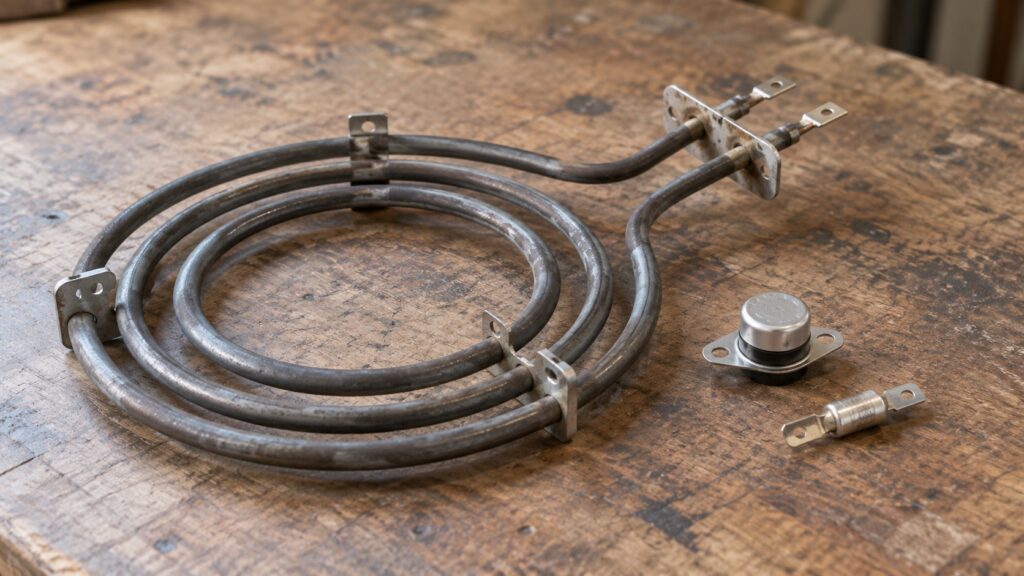
A Maytag electric dryer does not burn anything. It runs electricity through a coil of resistance wire, and the wire gets hot the way a toaster wire does. The coil lives in a metal housing in the path of the incoming air. The blower draws room air across that hot coil and into the drum, where it picks up moisture from the clothes and is carried out through the vent. Our Maytag dryer not heating guide describes the element as a coil of resistance wire inside a metal housing, usually behind the rear panel on Maytag electric dryers.
That is why the heat and the motion are separate. The motor turns the drum and drives the blower. The element makes the heat. A dryer can lose either one without losing the other.
Why does the dryer need a 240-volt circuit?
The motor and controls run on 120 volts. The element needs 240. Electric dryers take both legs of a double breaker, and each leg carries half of the supply. If one leg trips, or if a connection is loose, the controls light up and the drum turns on the 120-volt side while the element gets nothing. That pattern, a dryer that tumbles but stays cold, is why our pages tell you to check the panel for a half-tripped breaker first: flip it fully off and then on. The L2 display on a Maytag dryer points the same way. Our dryer L2 code page describes it as low or no line voltage, such as a tripped leg of the 240-volt supply, or a wiring or breaker issue.
What do the fuse and thermostats do?
Three parts stand between the supply and the element, and each one has a job.
The cycling thermostat regulates temperature by switching the element on and off. If it fails open, the element never gets power. If it fails closed, the dryer overheats.
The high-limit thermostat is a safety part. It cuts power if the exhaust temperature goes above a safe limit, and like the fuse, it is usually triggered by restricted airflow.
The thermal fuse is the last line of defense. It blows if the dryer overheats and cuts power to the element, and once blown it does not reset: it has to be replaced. Our guide notes that a blown thermal fuse almost always means the venting is restricted, so cleaning the vent matters before anyone replaces the fuse, or it can blow again. See the Maytag dryer vent cleaning guide.
What does air flow have to do with heating?
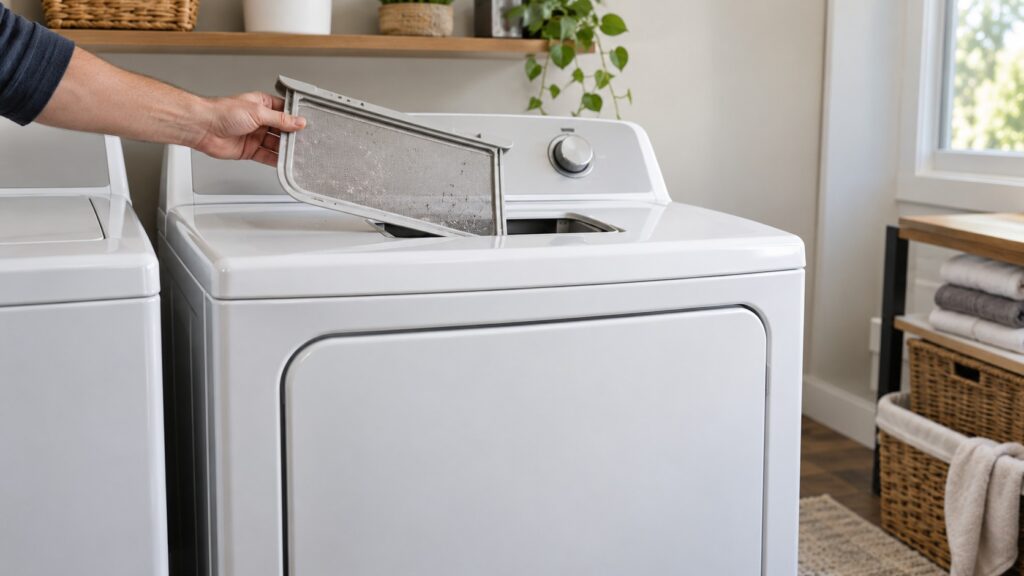
Everything. The element heats the air, and the vent carries it away. If the vent or the lint screen is clogged, hot air has nowhere to go. The temperature inside rises, the safety parts trip, and the dryer either stops heating or takes far longer to dry. That is also why a dryer that takes far longer than it used to deserves a look at the airflow first: our takes-too-long page lists a clogged lint screen or vent ahead of a weak element or a moisture sensor. Read Maytag dryer takes too long if the load is damp after a long cycle.
A burning smell near the dryer is a different matter. Stop the dryer, turn off its breaker at the panel (standing on a dry floor) and read our dryer burning smell page before you run another load.
How does a heat pump dryer differ?
Maytag heat pump dryers do not have a traditional heating element, so almost everything on this page does not apply to them. Reduced heat on those dryers usually comes from clogged filters, a dirty heat exchanger or a problem in the heat pump circuit, according to our guide. If you own one, read how Maytag heat pump dryers work instead. Gas dryers use an igniter and a gas valve in place of an element and carry their own safety steps. If you ever smell gas, do not touch any switch or plug, leave the house and call the gas company or 911 from outside; gas parts are for a technician only.
What can you check, and what should you leave alone?
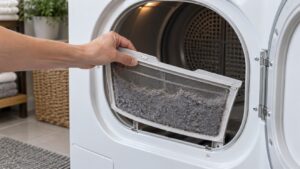
Three checks are safe for an owner. Look at the breaker and reset a half-tripped double breaker fully. Empty the lint screen and look at the vent hose behind the dryer for a crush or a loose connection. Run the dryer on a short cycle to see whether the vent flap opens outside. That is the extent of it.
Testing a thermostat, a thermal fuse or an element needs a multimeter and access behind the panel. Those parts sit on a 240-volt circuit, so none of this is an owner job: leave the testing to a technician, who will cut the power first. We are an independent repair company, and our dryer repair page explains the visit. You can book a visit online.