Maytag range hood installation comes down to four decisions that you make before you lift the hood: how high it hangs above the cooktop, whether it vents outdoors or recirculates, how the duct runs, and where the power comes from. Maytag’s UXT under-cabinet hoods, from the 30-inch UXT4030ADS to the 400 CFM UXT5430ADS, are straightforward to hang when those four are settled, and awkward when they are not. This guide walks through each decision in the order you should make it, and flags the points where a hood goes wrong.
How high should you mount a Maytag under-cabinet range hood?
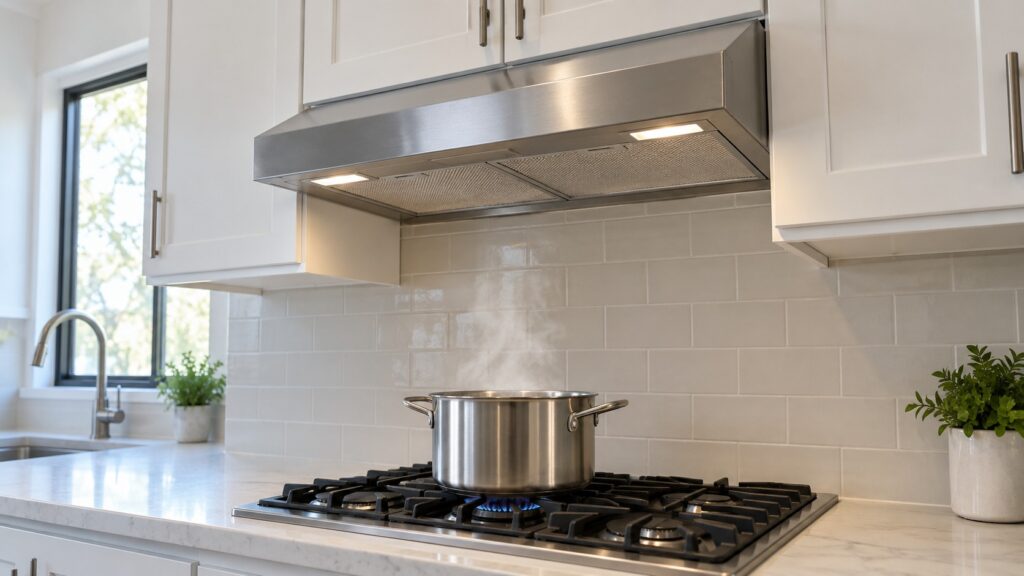
The mounting height is set by the installation sheet for your model, and the usual range is a couple of feet above the cooking surface, with a little more clearance above a gas cooktop than above an electric one. A hood hung too low is a heat and fire concern and gets in the way of tall pots. A hood hung too high loses its grip on smoke and steam, because the plume spreads before the fan can pull it in. Mark the height on the wall and check it against the sheet before you drill. If the cabinet above the cooktop is not the right height for the hood, that is a design problem to solve first, not by guessing.
Should the hood vent outside or recirculate?
Venting outside is better, because it removes heat, moisture, grease and combustion gases from the house. Recirculating is the fallback when no duct route exists. The air passes through a charcoal filter, which removes some smoke and odor, and returns to the kitchen. A hood set up to recirculate cannot remove humidity or gases, and the charcoal filter needs regular replacement. Our ducted versus recirculating guide compares the two and explains how CFM figures relate to your cooktop.
If you choose to recirculate, buy the charcoal filter kit for your exact model before installation day, and confirm which discharge position the hood needs.
How should you run the duct?
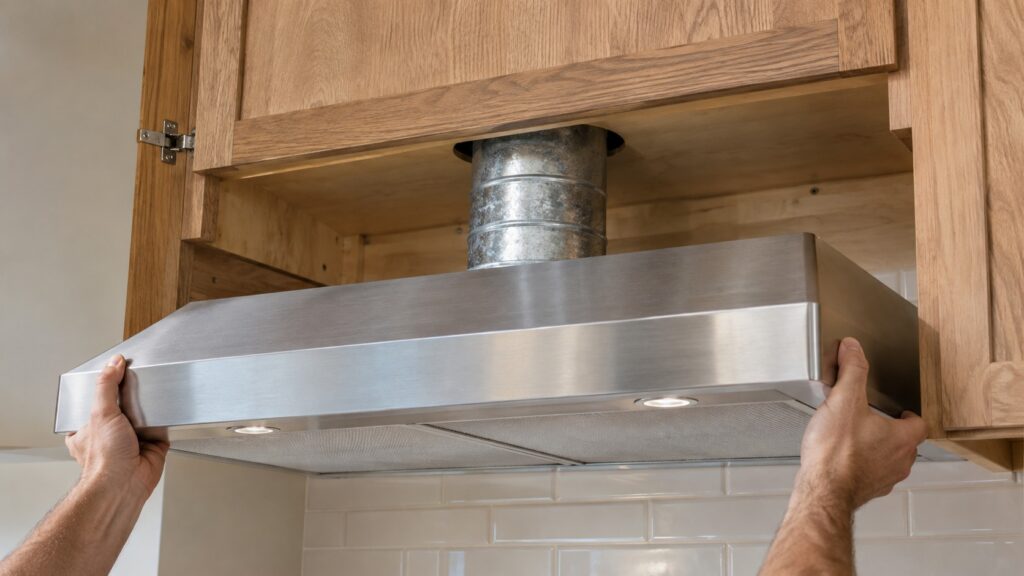
A short, straight, smooth duct moves air best. Every elbow and every extra foot of pipe slows it, and a long, bendy run can cut the real airflow of a 400 CFM hood to a fraction of its rating. Use rigid metal duct of the size in the installation sheet, and do not choke it down to a smaller pipe. Avoid white or silver flexible foil duct, which sags, collects grease and restricts flow. Seal the joints with foil tape, not cloth duct tape, and run the duct to an outdoor cap with a damper that opens when the fan runs. Never vent into an attic, a soffit or a wall cavity.
If the duct has to pass through a wall or a cabinet, cut the opening cleanly, keep the pipe from touching wiring and make sure the pipe slopes slightly toward the outside so condensed grease does not run back toward the hood. When in doubt about the route, ask a professional to look at it before you cut anything, because a hole in the wrong place is much harder to fix than a measurement taken twice.
Weak suction after a new installation is almost always a duct problem, not a hood fault. If it happens, our blower and duct care guide explains how to check the path.
How is the hood wired, and what must you do for safety?
The hood runs on a standard household circuit wired at a junction in the hood body. Switch off the breaker that feeds the wire, then confirm with a non-contact tester that the wires are dead before you touch them. Connect the wires as the sheet shows, using the connectors supplied, and fasten the ground wire to the hood’s ground screw. If there is no cable at the location, a new cable and a junction box are an electrician’s job, not a weekend guess. Do not rely on a wall switch alone to prove the power is off.
How do you hang the hood?
Fasten the hood to the underside of the cabinet or to the cabinet frame with the screws supplied, driving them into solid wood and not into thin cabinet-bottom panel alone. A 400 CFM hood with a blower motor is heavy, and the weight pulls on the screws. Have a helper hold the hood against the marks while you drive the screws. Tighten evenly, check that the hood is level side to side, and fit the duct collar and damper before you finish. Then fit the filters, the lamp and the cover, close the breaker and test every speed.
What should you test after installation?
Run the fan on each speed and listen for rattle, which usually means a loose mount or a blower wheel that is touching the housing. Hold a tissue near the front edge and check that it is pulled toward the hood. Check the light. Outdoors, go to the duct cap and confirm that the damper opens and air flows out. If the fan hums but does not spin, or the light does not work, our fan or light not working guide covers the usual causes, and the grease filter cleaning guide explains how to keep the filters clear.
We are an independent repair company, not the manufacturer. If a new hood is weak, noisy or dead, our Maytag range hood repair service can diagnose the fault, and you can book a visit online.