Getting the most from Maytag FastFreeze means using it at the right time, not all the time — FastFreeze temporarily runs the freezer colder than its normal set point to freeze a fresh batch of food faster than the freezer’s standard temperature would, which reduces ice crystal formation in the food but also runs the compressor harder while it’s active, so leaving it on indefinitely works against you rather than for you.
Why does freezing speed actually affect food quality?
When food freezes slowly, the water inside its cells has time to form larger ice crystals, and those larger crystals rupture more cell walls as they form. That’s part of why slowly frozen meat or produce often comes out noticeably softer, more watery, or less texturally appealing after thawing compared to when it went in fresh. Freezing quickly forms smaller ice crystals that do less structural damage to the food’s cell walls, which is the entire reasoning behind FastFreeze: temporarily running the freezer colder pushes a fresh batch of food through the temperature range where ice crystals form as quickly as possible, minimizing that structural damage.
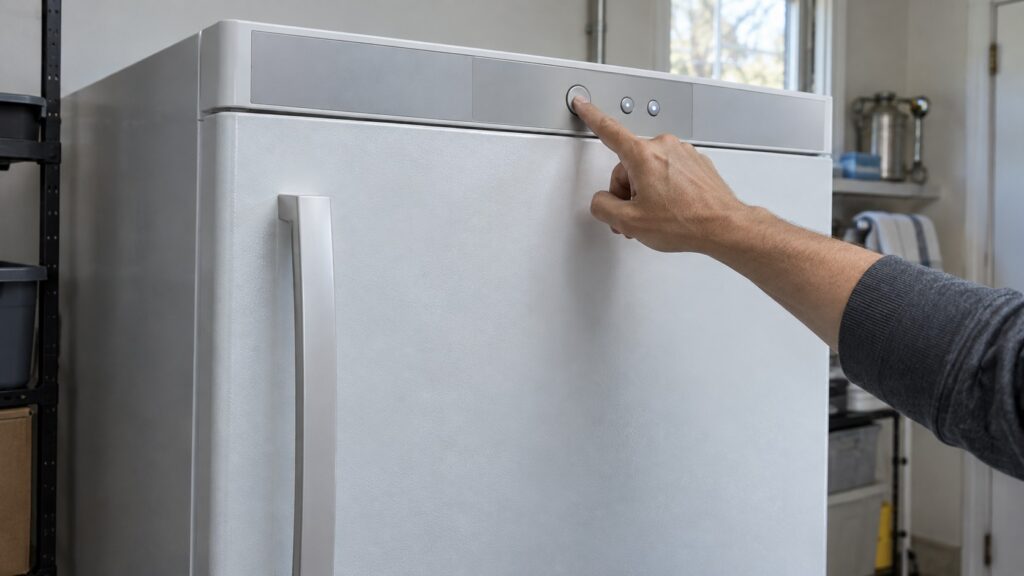
When should you actually turn FastFreeze on?
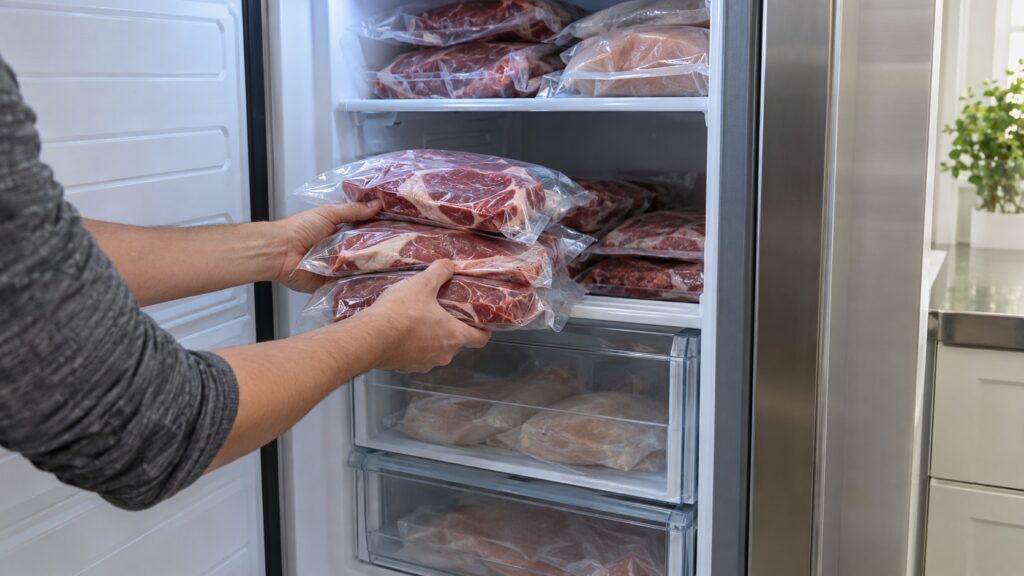
FastFreeze earns its keep specifically when you’re adding a meaningful quantity of fresh, unfrozen food to the freezer at once — a bulk meat purchase, a batch of home-cooked freezer meals, garden vegetables you’re preserving for the season. In those situations, a large mass of room-temperature or refrigerator-temperature food entering the freezer raises the internal temperature more than the freezer’s normal operation is designed to compensate for quickly, and FastFreeze’s extra cooling capacity handles that load without letting everything already in the freezer warm up in the process. Turning it on for a single small item — one steak, a small container of leftovers — doesn’t meaningfully change the outcome, since a small amount of food doesn’t tax normal freezer capacity the way a large batch does.
Why shouldn’t you just leave FastFreeze running all the time?
Running the freezer colder than its normal set point means the compressor works harder and more continuously to maintain that lower temperature, which uses more energy than normal operation for no additional benefit once the initial freezing job is done. Food that’s already fully frozen doesn’t benefit from being held even colder — the ice-crystal-size advantage only applies during the actual freezing process, not to food that’s already solid. Beyond the energy cost, running a freezer colder than intended for extended periods puts more continuous strain on the compressor than its duty cycle is designed for long-term, which is a reasonable thing to want to avoid on a component that’s expensive to repair if it fails. The practical habit is turning FastFreeze on right before adding a fresh batch and turning it back off once that batch is solidly frozen.
How long does it actually take for FastFreeze to finish freezing a fresh load?
The exact duration depends on your model and how much food you’re adding, and it’s worth checking your specific freezer’s manual rather than guessing, since some models include a recommended window — often around a day — for how long to leave the feature active before switching back to normal operation. Adding more food than the feature is designed to handle in one batch, or leaving a very large quantity in a small chest or upright freezer, can extend how long it genuinely takes to freeze solid all the way through, regardless of what the manual’s general guidance suggests for a typical load.
Does FastFreeze affect anything else already in the freezer?
Because FastFreeze lowers the whole compartment’s temperature rather than targeting just the new food, everything already frozen in the freezer gets colder too while it’s active — that’s not harmful to already-frozen food, but it’s worth knowing so you’re not surprised by ice buildup or frost forming a bit more actively than usual elsewhere in the freezer during the period FastFreeze is running. Once you switch it back to normal operation, the whole compartment settles back to its regular set point without any lingering effect on food that was already stored there.
What should you do if FastFreeze doesn’t seem to be freezing food any faster than normal?
If a fresh batch of food is taking noticeably longer to freeze solid with FastFreeze active than you’d expect based on your model’s guidance, that’s worth checking against how the food was loaded — packing a freezer too tightly restricts the cold air circulation the extra cooling capacity depends on to actually reach the food evenly, which can undercut the benefit even with the feature turned on. If airflow and loading look reasonable and freezing still seems unusually slow, that may point at a broader cooling issue rather than anything specific to FastFreeze — our freezer not freezing guide covers that broader diagnosis, and our how a Maytag freezer works guide covers the cooling system this feature relies on.
Is FastFreeze the same feature across every Maytag freezer model?
The underlying idea — a temporary, deeper cooling push for a fresh batch of food — is consistent across the models that offer it, but the exact activation method, the recommended active window, and whether the feature turns itself off automatically after a set period all vary by model. Some Maytag freezers switch FastFreeze off on their own after a fixed number of hours, while others rely on you to turn it off manually once the batch is frozen, which is worth knowing before you assume every unit behaves identically. If you have moved from an older Maytag freezer to a newer one, do not assume the timing habits you built on the old model apply exactly to the new one — a quick check of the current model’s manual settles the question in a couple of minutes and avoids leaving the feature running longer than it needs to. Our freezer maintenance and defrost guide is also worth a look if you want the placement and airflow around a new or recently moved unit right, since correct airflow matters as much to how well FastFreeze performs as anything about the feature itself.
It’s also worth checking the door seal on any freezer you’re regularly loading with large fresh batches, since a gasket that’s lost its seal lets the extra cold air FastFreeze is generating escape rather than actually reach the food — our freezer maintenance and defrost guide covers gasket care alongside the rest of the freezer’s routine upkeep.
If your freezer isn’t responding to FastFreeze the way it should, our technicians can check the cooling system directly — schedule a visit and we’ll confirm whether it’s a loading issue or something in the freezer itself.