Maytag freezer repair or replace decisions usually come down to age and whether the failure is isolated: a freezer under roughly 10 years old with a single failed part — a defrost heater, a fan, a thermostat — is almost always worth repairing, while an older unit with a failed sealed-system component like the compressor, or one that’s already had multiple unrelated repairs, tips the math toward replacement.
What kinds of freezer problems are usually worth repairing outright?
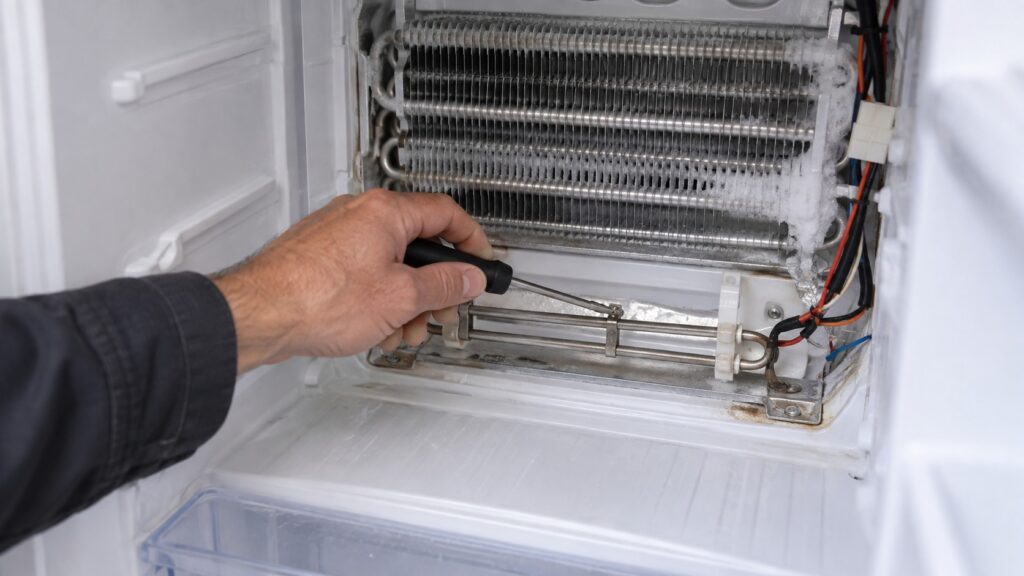
Most freezer service calls involve a single component rather than the whole cooling system: a defrost heater that’s stopped clearing frost buildup automatically, a defrost thermostat that’s failed to signal the defrost cycle correctly, an evaporator fan that’s stopped circulating cold air, or a door gasket that’s lost its seal and is letting warm air in continuously. Each of these is a contained, moderately priced repair on a freezer that’s otherwise sound, and fixing one restores the unit to full working condition without touching the compressor or refrigerant system at all. Our guide on a Maytag freezer not freezing walks through diagnosing which of these components is actually responsible for a given symptom.
Why does a compressor or refrigerant issue change the calculation so much?
Unlike a fan, heater, or thermostat, the compressor sits inside a sealed refrigerant system, and repairing it means reclaiming the existing refrigerant, replacing the compressor itself, then evacuating and recharging the system correctly — specialized work that costs meaningfully more than swapping an accessible part. A refrigerant leak carries a similar cost profile, since finding and sealing the leak point, then recharging the system, requires the same specialized equipment and licensing. On an older freezer, that higher repair cost is being weighed against a unit that likely has fewer years of useful life left regardless of the fix, which is exactly the combination that tips toward replacement being the better value. Our guide on how a Maytag freezer works covers the sealed cooling system in more detail if you want the fuller picture of what a compressor or refrigerant repair actually involves.
Does the freezer’s age alone decide whether to repair or replace?
Age matters, but it’s really a proxy for two things: how much useful life is statistically left in the unit, and how much wear has likely already accumulated on components you can’t easily inspect yourself. A freezer under about 10 years old with a single failed part is usually a clear repair — you’re paying for one component to restore years more service from a unit that has plenty left to give. An older freezer with the same single-part failure is a closer call, and it’s worth weighing against whether anything else about the unit — unusual noise, inconsistent temperatures even before this failure, an already-thinning door gasket — suggests other components are also approaching the end of their working life. A repair on a unit that’s about to need a second unfamiliar repair within a year isn’t the value it looks like on paper.
How does repair cost compare to buying a new freezer?
A moderately priced part repair — a heater, fan, or thermostat — is almost always far cheaper than a new freezer, which is why isolated failures on a freezer with years of life left are straightforward repair decisions. A sealed-system repair narrows that gap considerably, and once you add the labor and parts cost of a compressor or refrigerant job to an older unit, the total can approach a meaningful fraction of what a comparable new freezer costs — at which point the new unit’s remaining lifespan, energy efficiency improvements over an older model, and warranty coverage often make it the better overall value even though the sticker price is higher upfront.
What should you check yourself before deciding either way?
Confirm the freezer is actually getting adequate airflow around its condenser coils, and that nothing has changed recently about its location — a freezer pushed too close to a wall or moved into a space with poor ventilation can show symptoms that mimic a failing compressor without anything inside the sealed system actually being wrong. Also check whether the unit is under any remaining manufacturer or sealed-system warranty, since a compressor failure on a unit still within warranty coverage removes cost from the equation entirely and makes repair the obvious choice regardless of age. Our freezer maintenance and defrost guide covers the routine care that helps avoid some of these failures in the first place.
Does it matter whether the freezer is a chest or an upright model?
It can, mostly because of mechanical complexity rather than the repair-or-replace math itself. A chest freezer’s simpler layout — no ice maker, fewer moving door or drawer components, often a single manual-defrost system — means fewer things tend to go wrong in the first place, and the parts that do fail are usually straightforward to access and replace. An upright model, especially a frost-free one, carries more components that can fail independently: a defrost heater and timer, an evaporator fan, sometimes an ice maker. That added complexity on an upright doesn’t automatically favor replacement, but it does mean a repair estimate on an older upright freezer is more likely to reveal a second issue once a technician is already inside the cabinet.
Does a stand-alone freezer get evaluated any differently than the freezer section of a refrigerator?
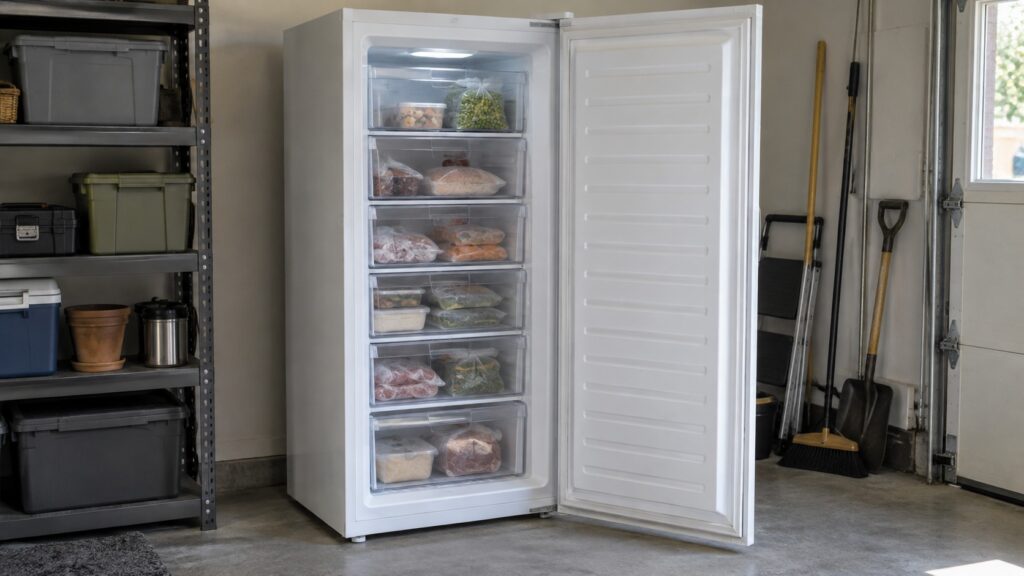
Yes, in one important respect — a stand-alone chest or upright freezer’s compressor and sealed system typically serve that unit alone, so a compressor failure affects only frozen storage, not fresh food. On a combination refrigerator-freezer, the same kind of sealed-system failure usually takes down cooling on both sides at once, which raises the practical urgency of a decision even though the underlying repair-or-replace math is similar either way. A household relying on a single stand-alone freezer for significant bulk storage — a hunting or fishing harvest, garden produce put up for the year — should weigh that dependency into the decision too, since an extended repair wait on the only freezer available carries a real cost in spoiled food that a repair estimate alone does not capture.
If your Maytag freezer has failed and you’re weighing repair against replacement, our technicians can diagnose the actual cause and give you a clear comparison before you commit either way — schedule a visit and we’ll walk through both options with you.